Showing posts with label sausage. Show all posts

Wednesday, March 2, 2011

Italian Sausage with Red Grapes

This is the last of the sausage recipes I have to give you. As you know, I truly love good sausage and I find them one of the quickest ways to get a delicious meal on the table. This recipe is no exception. The polenta will take you a bit of time but a nice loaf of bread would work just as well. A salad or the spinach suggested below and you're done.


1 medium onion, sliced
2 tablespoons olive oil
1 pound Italian sausage (about 4-5 sausages)
Note: I buy Caggiano Sweet Italian in Sonoma; buy fresh good quality Italian sausage, usually with fennel seed, where ever you are.
1 pound seedless red grapes, stemmed
Note: You can also use 1 cup Oven-Roasted Grapes (August 13, 2009 blog).
2 tablespoons balsamic vinegar
1 tablespoon finely chopped rosemary or thyme
Salt and pepper to taste

1. Heat 1 tablespoon of olive oil in a heavy 10-inch skillet, add the onions, and cook until they are soft and amber. Remove from the pan and set aside.
2. Heat remaining olive oil in the same skillet over moderate heat until hot. Brown the sausages on all sides, poking them with a fork each time you turn them. This will take about 8 minutes.
3. Add ½ cup water to the pan, cover and turn the heat to low. Simmer the sausages until they are cooked through, about 10 minutes, turning once. Remove all but ¼ cup of the remaining liquid.
4. Add grapes and cook, stirring occasionally, until grapes are softened, 5 minutes or so. If using Oven-Roasted Grapes, you only need to cook them for a few minutes to warm them up.
5. Remove the sausages from the pan. Add the reserved onions, half of the rosemary or thyme, and the vinegar to the grapes and stir to mix everything together. Taste for salt and pepper and add as you see fit.
6. Cut the sausages in half and return to the pan. Heat briefly until everything is nicely hot. Sprinkle with remaining rosemary or thyme.

4 servings
Adapted from Gourmet Magazine, October 2005

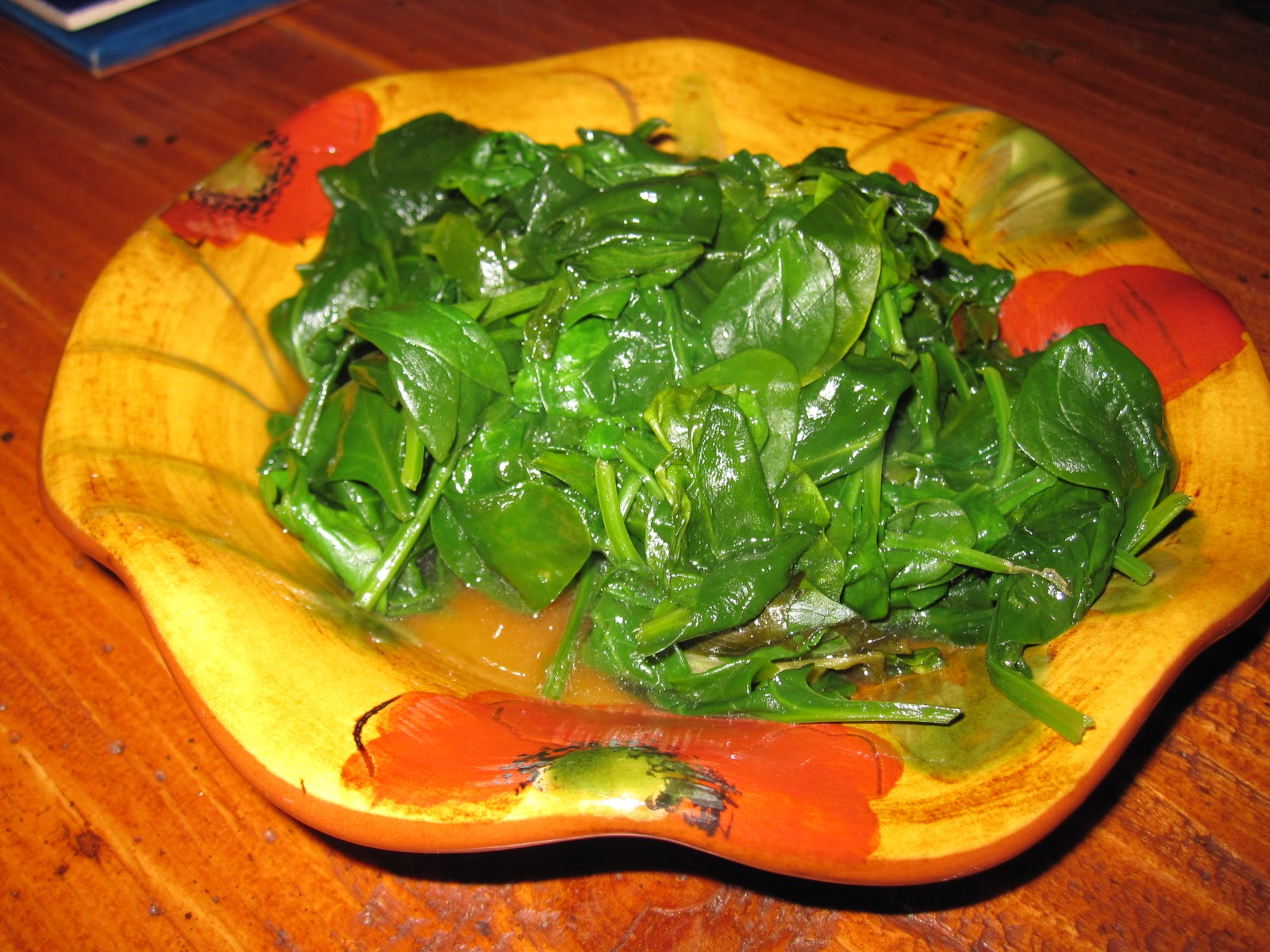
I often serve this with Creamy Polenta (June 11, 2010 blog) to which you can add the liquid in which the sausages have cooked and Spinach (May 31, 2010 blog).

Tuesday, February 1, 2011

Comfort Food: Pancakes and Pasta

Everyone’s definition of “comfort food” is different. When I was sick as a child, all I wanted was creamy oatmeal with raisins and brown sugar. Warm, soothing, with a hint of sweet. The following two recipes hit the mark for me as well. Freshly made pancakes with warm real maple syrup or homemade apple sauce. The perfect way to start a day when you know the afternoon will hold a nap. And the creamy garlic-infused pasta that calls out to be eaten on a chilly day when the rich fulsome sauce encourages you to give into your desire to snuggle under the covers with a good book after consuming a bowlful.

Pancakes
These really are wonderful pancakes. I started making them in Japan when my first son, Franz, was a baby and continued making them through the boys' teen years, mostly for breakfast but sometimes for dinner when I was down to eggs and milk in the fridge and flour in the cupboard.


¾ cup white flour
¾ cup whole wheat flour
1 teaspoon salt
2 tablespoons sugar
2 teaspoons baking powder
1 cup milk
2 eggs
3 tablespoons oil
1 tablespoon molasses

1. Sift the flours, salt, sugar, and baking powder into a large mixing bowl. If you don’t have a sifter, place all the dry ingredients in a large mixing bowl and stir well.
2. Pour the milk into a measuring pitcher.
3. Separate the eggs, dropping the whites into a small mixing bowl and the yolks into the milk. Add the oil and molasses to the milk mixture and stir to combine.
Note: The molasses will slip right out of the tablespoon if you use your tablespoon to measure the oil first.
4. Pour the milk mixture into the dry ingredients. Stir lightly until just blended.
5. Beat the egg whites, until they hold a soft peak. Gently fold into the pancake mixture.
Note: If you want to get some exercise beating your egg whites, use a whisk or an old-fashioned eggbeater. If not, use a hand-held electric mixer.

6. Pour about ¼ cup batter into a lightly greased large frying pan or griddle on medium high heat. You can probably cook about 3 pancakes at a time with room to turn them over easily. Cook until bubbles form in the pancake and the edges are set. Flip and cook until the bottom is brown and the pancake is cooked through.

7. You can keep the first pancakes warm in a 250°F oven for a short period of time while cooking the rest.
8. Serve with warm maple syrup, applesauce, jam, yogurt—or whatever you fancy.

Makes 10 regular-sized pancakes
Handwritten from a cooking notebook I kept while in Japan, 1971-73
As you can see from above, I added a photo to the page just recently.


A Creamy, Calming Pasta Dish with Sausage


4 heads of garlic or an equivalent number of garlic cloves
Note: Most supermarkets now-a-days have plastic containers of peeled garlic in the produce department. If you are pressed for time, this is the occasion to use them.
2 tablespoons olive oil
6-8 springs of fresh thyme
1 pound dried shell or tube-shaped pasta [I used Delverte’s No. 32 Penne Rigate]
2 cups heavy cream
Salt and pepper to taste
4 fresh sweet uncooked Italian sausages
2-3 sprigs of fresh thyme, stripped and chopped

1. Place the unpeeled whole heads of garlic or the equivalent peeled garlic cloves in a small baking pan. Drizzle with oil and thyme and place in a 400ºF oven. Roast the garlic until the cloves are very soft and sweet, 50-60 minutes for the heads and much less for the cloves.
2. Cool the garlic heads and then tear them apart and squeeze out the contents of each clove into a small bowl. [This step took nearly all of my considerable patience and is the reason I devised a simpler method.] Or place the peeled cloves in a bowl. Mash them into a paste, adding a small bit of your 2 cups of cream to help the process.
Note: You can use a mortar and pestle, a Japanese suribachi, a potato masher, a small food processor or a fork to smash and mash the garlic. You do not need to make it perfectly smooth unless you want to.
3. Put your pot of salted water (for cooking the pasta) on the stove on high. Bring it to a boil while you are working on the next two steps.
4. Warm the garlic paste in a sauté pan over moderate heat, pour in the cream, whisk the garlic and the remaining cream to combine, bring to a simmer, add salt and pepper to taste, and cook for several minutes.
5. Skin the fresh sausage, crumble the meat into a frying pan and fry until done.
6. Cook the pasta in your pot of boiling salted water until it is al dente. Drain in a colander, saving about ½ cup pasta water to use in the sauce as needed.
7. Tip the pasta and drained sausage into the cream, toss gently and heat until all the elements are warm and the cream is gently bubbling. If the sauce is thicker than you like it, add a bit of the reserved pasta water to thin it out until you reach the consistency that is right for you. Add more salt and pepper if needed. Ladle into plates or bowls and garnish with fresh thyme leaves.

I serve this pasta with steamed spinach; I like its bracing flavor up against the richness of the cream and pasta.


6 servings
Adapted from Nigel Slater’s Appetite

Wednesday, June 16, 2010

The Brits Cook Sausages and Bacon

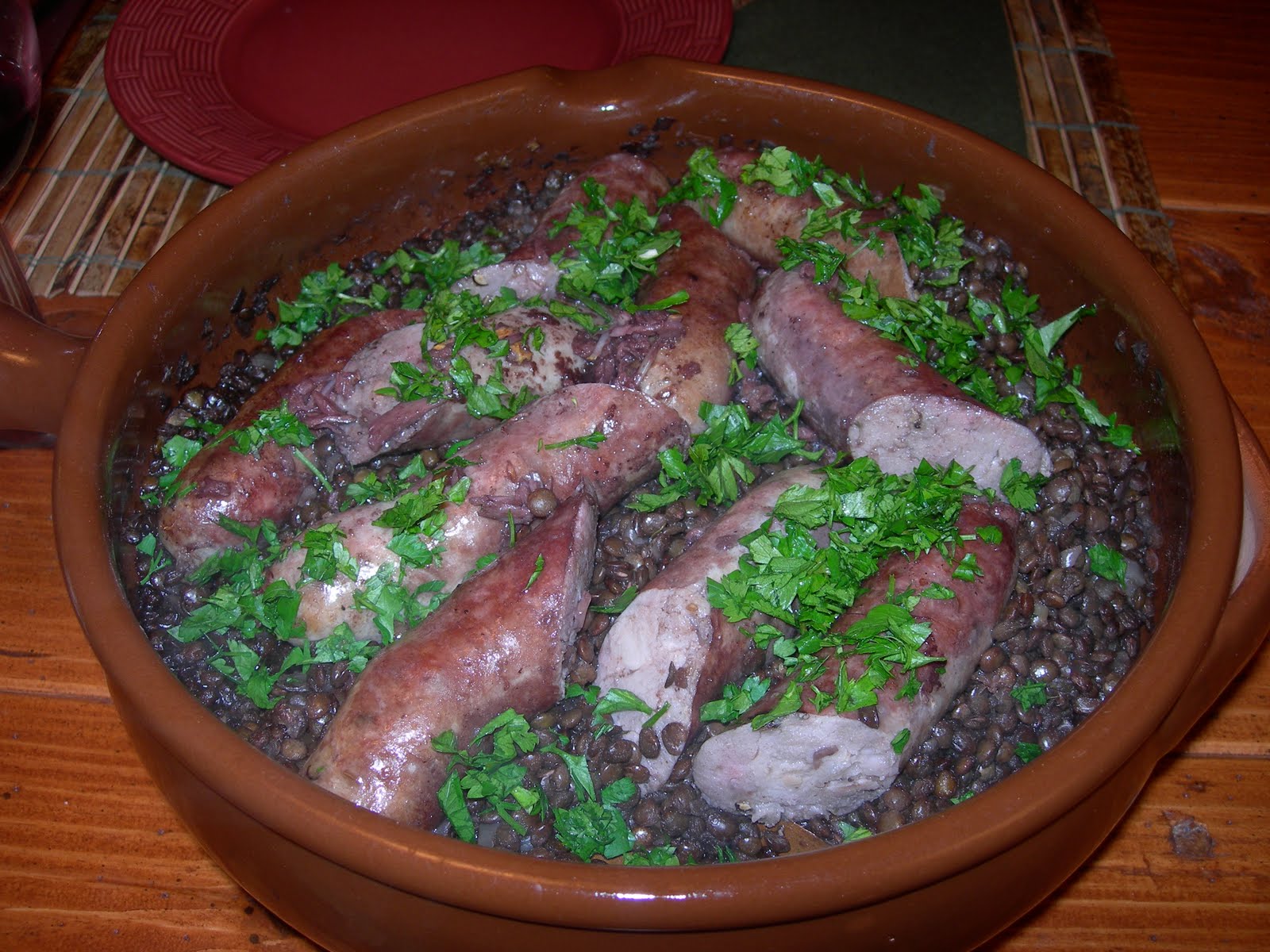
Italian Sausages with Lentils


For the lentils:
1-2 tablespoons olive oil
1 onion, finely chopped
Sprinkling of salt
2 cups dried Puy lentils (green or black or a mixture)
1 bay leaf
6 sprigs of fresh thyme
½ cup red wine
3 cups stock or water to cover the lentils
Salt and pepper to taste

For the sausages:
1-2 tablespoons olive oil
2 large garlic cloves, peeled and smashed
6 fresh uncooked sweet Italian sausages
½ cup red wine
¼ cup water or stock
Flat-leaf parsley for garnish

1. To cook the lentils, put 2-3 tablespoons of oil into a good-sized pan or a Bram pot over low heat. When it’s warm, add the chopped onion and sprinkle with salt. Cook over a low heat until the onions are soft but not browned, about 10 to 15 minutes. Add the lentils, bay leaf, and thyme sprigs, stir well, and cover generously with the red wine and the stock or water. Bring to a boil, cover, and simmer gently for 30-50 minutes or until the lentils are cooked and most of the liquid’s absorbed, stirring occasionally. Add salt and pepper to taste. You can make this ahead. Reheat when you’re ready to proceed.
2. To cook the sausages, add 1-2 tablespoons olive oil and the smashed garlic cloves to a heavy frying pan, and fry for a few minutes. Add the sausages and brown on all sides. Add the wine and stock, bring to a boil, and then turn down the heat, cover the pan and simmer the sausages for about 15 minutes, turning mid-way. When the sausages are done, cut in half on the diagonal, add them to the lentils. Mash the garlic into the remaining liquid and add it to the lentil pot. Taste for seasoning and adjust with salt, pepper, or more liquid until it is to your liking.
3. Before serving, reheat the lentil and sausage mixture over low heat. Sprinkle with parsley.

4-6 servings
Adapted from Nigella Lawson’s Nigella Bites

Warm Potato Salad with Garlic Sausage


6 ounces small potatoes or about 12 small potatoes
½ cup white wine
1 cup chicken stock
6 Garlic, Italian or Sicilian fresh sausages, cooked and cut in thick slices
3 ounces Swiss cheese, cut in small cubes
1 tablespoon chopped chervil (if you can find it)
1 tablespoon chopped tarragon
¼ cup chopped chives

Mustard and White Wine Vinaigrette:
1 tablespoon Dijon mustard
1/3 cup white wine vinegar
½ cup olive oil
Salt and pepper to taste

1. Cook the potatoes in boiling water until just soft. (Or steam as in the French Potato Salad on my March 13, 2010 blog). Drain and cut into thick slices. If the potatoes are small, halve or quarter them.
2. Bring the wine and stock to a boil and reduce by two-thirds. Remove from the heat and toss the potatoes into the mix and leave for 10 minutes to infuse.
3. Warm the cooked sausages in a 350ºF oven for 6 minutes in a Bram pot or an ovenproof skillet. Combine the sausages and the potatoes in the pot or skillet.
4. Whisk together the mustard and vinegar. Slowly add the oil and season with salt and pepper to taste. Pour this over the potato mixture; you may not need all of it. Add the cheese and herbs and toss together. Serve the salad in the Bram pot or, if you used a skillet, transfer to a serving bowl. Serve warm.

4-6 servings
Adapted from Simon Rimmer’s Rebel Cook: Bending the Rules for Brilliant Food

Brussels Sprouts and Bacon


1 pound Brussels sprouts
1 tablespoon butter or bacon fat
½ cup thinly sliced bacon or pancetta
Salt and pepper to taste
3-4 tablespoons water, as needed
2 tablespoons fresh lemon or lime juice

1. Shred/slice the Brussels sprouts either by hand or with a food processor. The processor doesn’t do as nice a job as by hand, but it is so fast.
2. Heat the butter in a large, shallow pan. When it is warm, add the sliced bacon and stir until it is soft and cooked through.
3. Add the shredded sprouts and ½ teaspoon salt and pepper. Fry until the sprouts begin to soften. Add the tablespoons of water as needed to help with the cooking and to loosen and incorporate any brown places on the bottom of the pan.
4. The sprouts are ready when they are soft and coated with the bacon juices. Most of the water will have evaporated. Adjust the seasonings. Add the lemon or lime juice just before serving.

4 servings
Adapted from Nigel Slater’s Real Fast Food

Friday, June 11, 2010

Cooking from the Cupboard

Polenta, Sausage and Tomato Layers
This is one of those incredibly versatile dishes which is easy to prepare, immensely likable to just about every age group--especially teenage boys--with ingredients that can pretty much live in your cupboard or fridge. The better the ingredients you use in the dish, the better the result.


1 recipe Creamy Polenta (see recipe below)
½ cup grated Parmesan cheese
4 Italian sausages, skin removed, coarsely chopped
Note: If your Italian sausages are not flavored with fennel seed, you can add ¼ teaspoon fennel seed to the sausage as you cook it
1½ cups home-made tomato sauce or a good one in a jar
12 ounces fresh mozzarella cheese, sliced ¼ to ½ inch thick
¼ teaspoon black pepper or Aleppo pepper

1. Make the polenta. See recipe below.
2. Preheat over to 375ºF. Butter a 2½-quart flameproof casserole.
3. Add ¼ cup Parmesan cheese to the hot polenta. Stir well. Pour into the prepared casserole. Sprinkle with 2 tablespoons of Parmesan.
4. While the polenta is cooking, sauté the sausage over medium heat, breaking up the pieces with a wooden spoon, until browned and cooked through, about 10 minutes. Remove from the heat.
5. Add the sausage to the casserole on top of the polenta, forming an even layer. Spoon on the tomato sauce, and sprinkle with the remaining 2 tablespoons Parmesan. Top with the mozzarella in an even layer. Sprinkle the mozzarella with black or Aleppo pepper (or both).
6. Bake until bubbling, about 30 minutes. If the top is not browned to your liking, place the casserole under the broiler until browned, watching it carefully. Let stand for 10 minutes before serving.

6 servings
Adapted from Julee Rosso and Sheila Lukins’ The New Basics

Creamy Polenta


3 cups milk
Note: You can substitute other liquids if you desire.
1 tablespoon butter
1 teaspoon sugar
1 teaspoon salt
1 cup stone-ground yellow cornmeal
2 tablespoons butter, melted

1. Combine the milk, butter, sugar, and salt in a heavy saucepan and heat to a simmer.
2. Slowly add the cornmeal, whisking constantly. Lower the heat and continue stirring with a wooden spoon until the mixture has thickened and leaves the sides of the pan, about 10 minutes.
3. Taste for salt. Add more if necessary. Serve topped with melted butter.
If you are using this with Polenta, Sausage and Tomato Layers or as a bed for the Bacon-Tomato-Corn Ragout, you don’t need to add the butter at the end.

Note: If you make this ahead, you have two options: (1) Set it aside in the pan and reheat it on the stove adding more liquid to loosen it up to your liking. Or (2) Remove from the pan and place in a microwavable bowl, adding more milk or other liquid to loosen it up before serving. Warm it on low heat in the microwave. In both options, keep adding liquid and stirring and heating until it is the consistency of mashed potatoes. Check for salt.

6 servings
Adapted from Julee Rosso and Sheila Lukins’ The New Basics

Tuesday, January 26, 2010

Southern Comfort Food from Foster's Market

Foster’s Pimiento Cheese Spread
Katherine’s mother who lives in Roanoke, Virginia always has a deli tub of this spread awaiting us in the fridge. The one she buys at her favorite place is really good. This one is even better.


1 cup (4 ounces) grated sharp Cheddar cheese
Note: You can grate the cheeses in a food processor if you wish.
1½ cups (6 ounces) grated Parmesan cheese
1 cup (4 ounces) grated smoked or regular Gouda cheese
2 roasted red bell peppers, peeled, cored, seeded, and chopped
     See note below for roasting instructions
1 cup mayonnaise
1 jalapeno, red is preferable but green is OK too, seeded and minced
1 tablespoon cider vinegar
1 tablespoon honey
½ teaspoon smoky sweet or regular paprika
1 teaspoon salt
1 teaspoon pepper

1. Mix together the cheeses and the roasted peppers in a large bowl.
2. Combine the mayonnaise, jalapeno, vinegar, honey, paprika, salt and pepper in a small bowl and stir to blend well.
3. Stir the mayonnaise mixture into the cheese mixture and mix well. Taste for salt, adding more if necessary. Refrigerate in an airtight contained until ready to use or up to 1 week.

There are lots of uses: on crackers, toasted bread, biscuits, English muffins, or chips; as a sandwich spread, a topping for baked potatoes, or an omelet filling. Great for breakfast, lunch, or a pre-dinner snack.

To roast the peppers: Place them on a shallow rimmed pan lined with aluminum foil. Place the pan under the broiler on the second shelf down from the top of the oven. Keep turning the peppers until they are blackened on all sides. Remove from the oven. Place them in a bowl and cover; when they are cool enough to handle, remove all the blackened skin, the seeds, and the stem. Refrain, if you can, from rinsing under water. I save the liquid that the peppers release for use in any situation calling for stock.

Makes about 4 cups
Adapted from Sara Foster’s The Foster’s Market Cookbook

Chilaquiles and Andouille Sausage Scramble with Salsa Verde

This makes a great dinner but it can also be served for breakfast.


4 corn tortillas, cut into 1-inch strips
OR
1½ cups slightly crushed tortilla chips
2 tablespoons olive oil, plus more for brushing the tortillas
Salt and pepper
1 andouille sausage link (about 8 ounces), thinly sliced into rounds
6 large eggs, lightly beaten
2 ounces Monterey Jack or cheddar or a combination of the two (about ½ cup)
Salsa Verde, see recipe below, or you can purchase tomatillo salsa

1. Preheat oven to 400ºF.
2. Scatter the tortilla strips on a rimmed baking sheet and brush lightly with olive oil. Season to taste with salt and pepper. Bake for about 15 minutes, shaking the pan occasionally and turning over the strips, until they’re golden brown on both sides and crisp.
3. Heat the 2 tablespoons oil in a large non-stick or cast iron skillet over medium-high heat. Add the sausage slices and cook and stir them for 4 to 5 minutes, until brown and cooked through.
4. Pour the eggs into the skillet and cook, gently folding the eggs as they cook, until just done but still wet looking. Season the eggs with salt and pepper and turn off the heat.
5. Add the cheese and tortilla strips or chips to the skillet and fold them into the eggs until the cheese melts and the tortilla strips or chips soften slightly.
6. Drizzle the chilaquiles with ½ cup of the Salsa Verde and serve warm with the remaining salsa on the side.

4-6 servings
Adapted from Sara Foster’s Casual Cooking

Salsa Verde


4 medium tomatillos, paper covering removed, chopped
OR
1 cup pureed canned tomatillos (with their juices)
½ cup fresh cilantro leaves
3 scallions, chopped (white and green parts)
2 garlic cloves, smashed
Juice of 1 lime
Salt and pepper

1. Combine the tomatillos, cilantro, scallions, garlic and lime juice in a blender and purée until smooth.
2. Serve immediately or refrigerate in an airtight contained until ready to serve.
3. Just before serving, season with salt and pepper.

Makes about 1½ cups
Adapted from Sara Foster’s Casual Cooking

Tuesday, September 8, 2009

Menu 9: Roman Holiday

Last summer, 2008, we spent a week in Rome with our son and daughter-in-law, Franz and Michelle. We stayed in a wonderful apartment which gently shimmied every time the subway went underneath the building. It didn't bother us much because we were mostly out eating. Franz and Michelle who know the San Francisco food scene had talked to their savvy friends about eating in Rome and came equipped with a thirty page document of recommendations. Oh my, how to choose? As the week drew to a close, they started double dining--two lunches and two dinners a day. Katherine and I cheered them on but declined to join them. One dinner and one lunch was more than enough for us. A great time and fabulous food.

Penne with a Slow-Cooked Sausage Sauce
As summer draws to a close and there is just the first hint of autumn in the air, I get hungry for pasta, especially the ones calling for a lot of fresh tomatoes. With a really simple salad, it is the perfect dinner.


2 tablespoons olive oil
8 Italian spiced, fresh pork sausages, meat removed from skins and crumbled
Note: I use Caggiano Sweet Italian sausage from Sonoma Market.
2 small red onions, peeled and chopped
2 garlic cloves, peeled and chopped
1 or 2 small dried hot chile pepper, seeds removed if you desire
2 bay leaves
1 cup dry red wine (preferably Chianti or Sangiovese)
1 28-ounce can peeled plum tomatoes
OR
2 pounds fresh tomatoes, peeled, seeded, and coarsely chopped
½ teaspoon ground nutmeg (or grate your own)
Salt and pepper to taste
¾ cup heavy cream
1 heaping cup freshly grated Parmesan cheese and more for the table
11 ounces penne rigate

1. Heat the oil in a large pan and sauté the sausage meat, stirring and breaking up the pieces. When the meat is cooked, add the onions, garlic, chiles, and bay leaves. Cook gently for 20 minutes or until the onions are soft and translucent.
2. Pour in the wine, increase the heat and cook until the wine evaporates.
3. Add the tomatoes, lower the heat and simmer gently until the sauce is thick, an hour or more depending on the juiciness of your tomatoes.
4. Season with nutmeg, salt and pepper. Add the cream and keep warm over a very low heat.
5. Cook the penne until al dente. Drain well. Place it in a warm bowl and add the sauce and cheese. Stir together and serve with additional cheese.

4-6 servings
Adapted from Rose Gray and Ruth Rogers’ Rogers Gray Italian Country Cook Book

Everyday Green Salad


Greens including arugula, watercress, romaine, butter, red or green leaf or a mix
I usually count on a good-sized handful per person
Treats might include pinenuts, raisins, avocado, grapefruit, apples, pears, artichoke hearts, green onions, herbs
I don’t add more than two or three to keep it simple
Simple Everyday Salad Dressing

1. Wash the lettuce if necessary. Spin dry in a salad spinner if you have one or dry with paper towels.
2. Place in a salad bowl. If you are doing this ahead of time, put a damp paper towel over the top of the lettuce and place the bowl in the refrigerator.
3. Just before serving, add any of the treats and the salad dressing. Toss to combine and serve immediately.

Makes as much as you desire
My own devising, but not original

Everyday Salad Dressing

2 tablespoons fresh lemon juice or vinegar such as sherry, balsamic, red or white wine
1 teaspoon Dijon mustard
4-6 tablespoons olive oil
salt and pepper to taste
1 small shallot or 1 garlic clove, finely minced, optional

1. Mix everything together in a bowl and whisk with a fork until it combines. Taste to make sure the balance is to your liking.
2. Pour over the salad just before serving. If you have any dressing leftover, store in clean glass mustard jar in the refrigerator. Bring to room temperature before using.

Makes about ½ cup
My own devising, but not original