Showing posts with label Bram pot. Show all posts

Thursday, January 13, 2011

Chicken for the Kids (and Grown-ups Too)

Lemon Chicken
I made this recipe for the first time shortly after acquiring The Silver Palate Cookbook in April 1984. Both of my boys (then 9 and 12) loved this chicken, maybe for the lemon but mostly, I suspect, for the brown sugar. Over the years, my taste has changed and I’ve vastly decreased the amount of sugar—but there is still a little hint of sweet that is balanced nicely with the sourness of the zest and juice.


9 chicken thighs, skin and extra fat removed
Lemon zest from 4 lemons
½ cup fresh lemon juice (about 4 lemons)
½ cup flour
1 teaspoon salt
1 teaspoon smoky sweet paprika
¼ teaspoon pepper
¼ cup vegetable oil
2 tablespoons brown sugar
¼ cup chicken stock
1 teaspoon lemon extract

1. Combine the thighs and lemon juice in a bowl just large enough to hold them. Cover and marinate in the refrigerator overnight, turning occasionally. A shorter time is fine too.
2. Drain the chicken thoroughly and pat dry, setting aside the marinade. Fill a plastic bag with flour, salt, paprika and pepper and shake well to mix. Put two pieces of chicken into the bag at a time and shake, coating completely.
3. Preheat oven to 350ºF.
4. Heat the oil in a large frying plan until hot and fry the thighs, until well browned. This will take about 10 minutes per batch.
5. Arrange the browned chicken in a single layer in a large shallow baking pan. Sprinkle them evenly with lemon zest and brown sugar. Mix together the chicken stock, leftover marinade, and lemon extract and pour around the thighs.
6. Bake for 35 or 40 minutes or until tender.

6-8 servings
Adapted from Julee Ross and Sheila Lukins’ The Silver Palate Cookbook

Friday, August 13, 2010

Menu 18: Summer at Its Best

This is a really wonderful summertime menu. Spicy Shrimp with Garlic and Oil, a loaf of crusty bread, your favorite salad or the Cherry Tomato, Mozzarella, and Corn Salad on my June 27, 2009 blog, with a delicious Berry Crumble for dessert. If you want to fancy it up a bit, you could add a first course of cold Yogurt and Cucumber Soup from my August 3, 2009 blog. Happy eating.

Spicy Shrimp with Garlic and Oil
I love the ease of cooking shrimp in their shells. Peeling and deveining shrimp is not one of my favorite kitchen activities. But I also love sucking the juices off the shrimp before peeling them at the table. And the peeling them myself slows me down and makes me anticipate and then fully appreciate their luscious flavor.


1 pound large or medium shrimp, in their shells
1/3 cup olive oil
6 cloves garlic or more if you are a garlic lover, slivered
1 tablespoon fresh thyme leaves
¼ teaspoon crushed red peppers or ½ teaspoon smoky hot paprika
½ teaspoon salt or to taste
2 tablespoons chopped flat leaf parsley

1. Rinse the shrimp and pat them dry.
2. In a skillet large enough to hold all the shrimp in a single layer, heat the oil over moderately high heat. When the oil is hot but not smoking, add the garlic, thyme, crushed red peppers or paprika, salt and shrimp. Toss to coat with oil, cook, stirring occasionally, just until the shrimp are pink, 4 to 5 minutes.
3. Remove the pan from the heat, and with a slotted spoon, transfer the shrimp to a warmed serving platter or to warmed individual plates. Pour the sauce over the shrimp, sprinkle lightly with the parsley. Serve immediately with paper napkins and plenty of bread to sop up the sauce.

3-4 servings for dinner
Adapted from Patricia Wells’ Trattoria

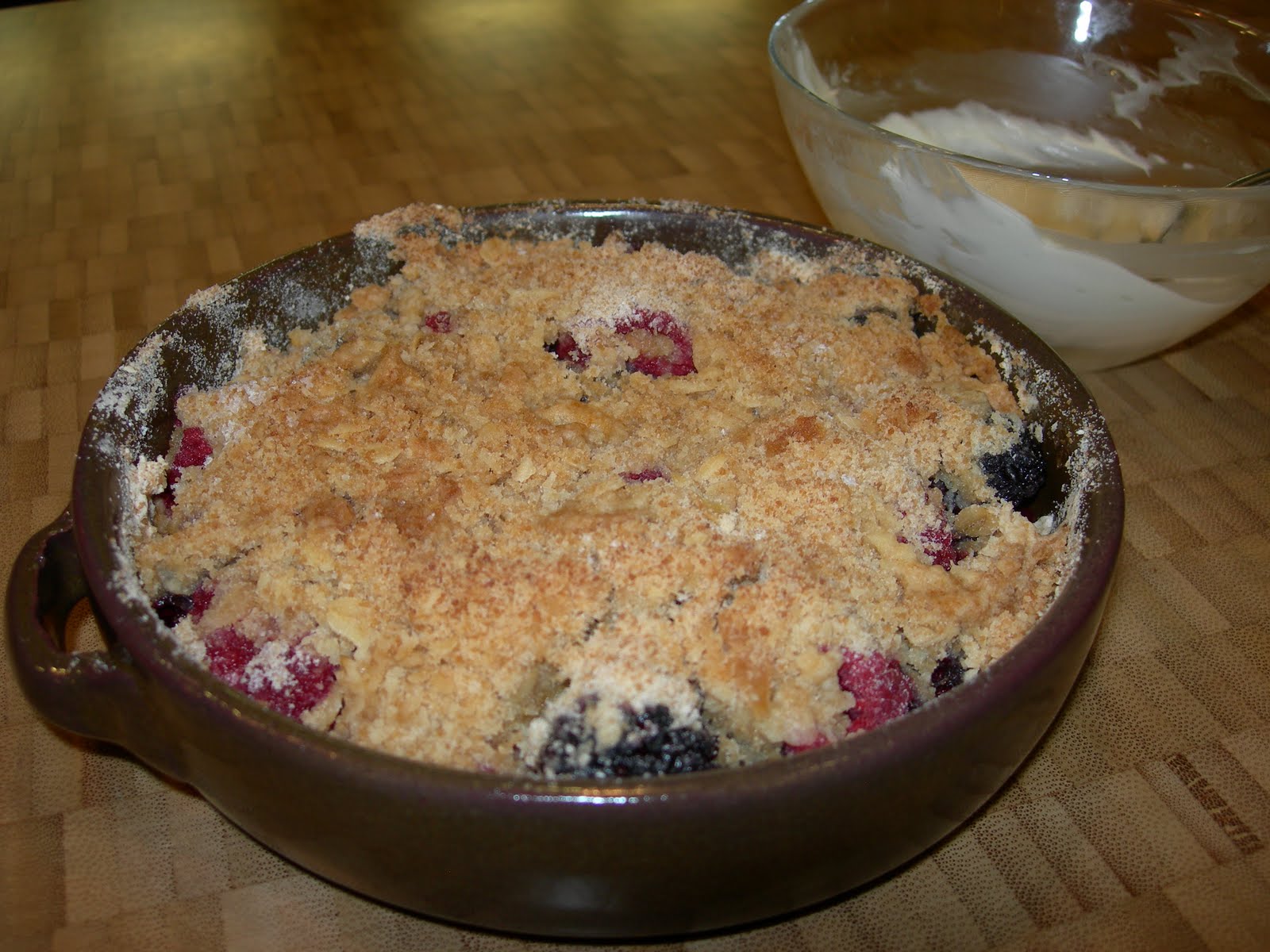
Individual Blackberry Crumbles
I wanted to include this recipe before berries left the Farmers' Markets around the country. Right now in Sonoma, blackberries from Andrea Davis' stand at the Friday market are at their prime but she's worried that the cold weather we've been having may slow down the ripening and sweetening. You'll remember her from my October 8, 2009 blog about her Quarter Acre Farm. Let's hope we have a spell of hot weather so those berries continue to thrive. And the tomatoes.


3 cups blackberries or comparable amount of blueberries or raspberries or a mix of all three
2 tablespoons sugar
1 cup flour plus 1 tablespoon
½ cup firmly-packed brown sugar
½ teaspoon salt
1 teaspoon baking powder
3 tablespoons oats (quick-cooking or regular)
2 tablespoons chopped candied ginger
6 tablespoons butter, cut into small pieces
Serve with vanilla ice cream, lightly sweetened whipped cream, crème fraiche or mascarpone mixed with a little sugar and milk or cream.

1. Place the berries, sugar and 1 tablespoon flour in a bowl and stir to mix. Divide the berries into four shallow ovenproof bowls.
2. Place the brown sugar, baking powder, salt, oats, and remaining flour in a bowl (you can use the same berry bowl) and mix well. Add the butter, rubbing it in with your fingers until the mixture resembles coarse breadcrumbs. You can also use a pastry cutter.
3. Sprinkle the berries with this mixture. Bake at 400ºF. for 20-25 minutes until golden brown and bubbling. Serve warm with one of the suggested toppings.
You can make this in one larger container, such as a gratin dish, without any changes.

4 servings
Adapted from Bill Granger’s Sydney Food

Wednesday, June 16, 2010

The Brits Cook Sausages and Bacon

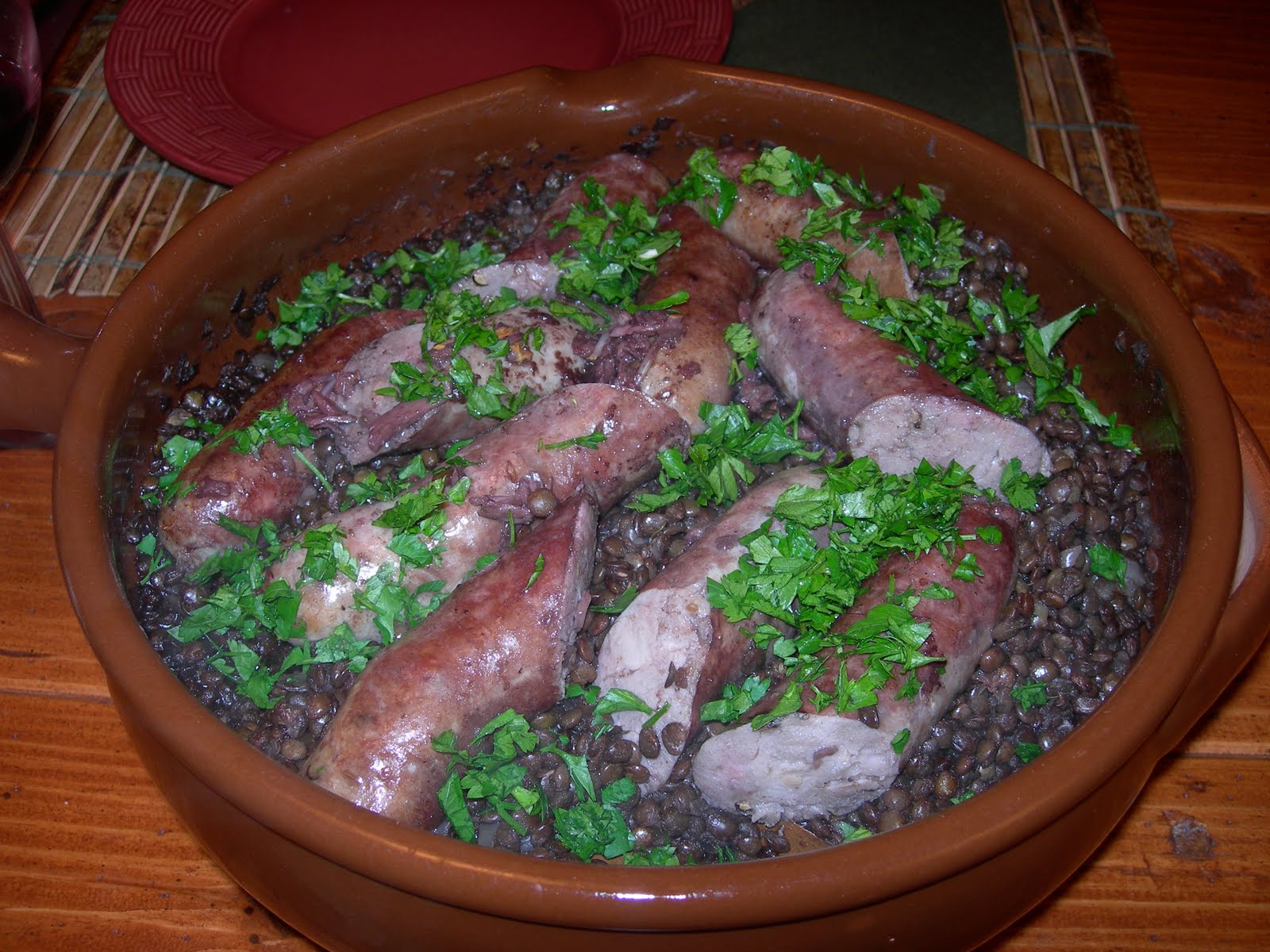
Italian Sausages with Lentils


For the lentils:
1-2 tablespoons olive oil
1 onion, finely chopped
Sprinkling of salt
2 cups dried Puy lentils (green or black or a mixture)
1 bay leaf
6 sprigs of fresh thyme
½ cup red wine
3 cups stock or water to cover the lentils
Salt and pepper to taste

For the sausages:
1-2 tablespoons olive oil
2 large garlic cloves, peeled and smashed
6 fresh uncooked sweet Italian sausages
½ cup red wine
¼ cup water or stock
Flat-leaf parsley for garnish

1. To cook the lentils, put 2-3 tablespoons of oil into a good-sized pan or a Bram pot over low heat. When it’s warm, add the chopped onion and sprinkle with salt. Cook over a low heat until the onions are soft but not browned, about 10 to 15 minutes. Add the lentils, bay leaf, and thyme sprigs, stir well, and cover generously with the red wine and the stock or water. Bring to a boil, cover, and simmer gently for 30-50 minutes or until the lentils are cooked and most of the liquid’s absorbed, stirring occasionally. Add salt and pepper to taste. You can make this ahead. Reheat when you’re ready to proceed.
2. To cook the sausages, add 1-2 tablespoons olive oil and the smashed garlic cloves to a heavy frying pan, and fry for a few minutes. Add the sausages and brown on all sides. Add the wine and stock, bring to a boil, and then turn down the heat, cover the pan and simmer the sausages for about 15 minutes, turning mid-way. When the sausages are done, cut in half on the diagonal, add them to the lentils. Mash the garlic into the remaining liquid and add it to the lentil pot. Taste for seasoning and adjust with salt, pepper, or more liquid until it is to your liking.
3. Before serving, reheat the lentil and sausage mixture over low heat. Sprinkle with parsley.

4-6 servings
Adapted from Nigella Lawson’s Nigella Bites

Warm Potato Salad with Garlic Sausage


6 ounces small potatoes or about 12 small potatoes
½ cup white wine
1 cup chicken stock
6 Garlic, Italian or Sicilian fresh sausages, cooked and cut in thick slices
3 ounces Swiss cheese, cut in small cubes
1 tablespoon chopped chervil (if you can find it)
1 tablespoon chopped tarragon
¼ cup chopped chives

Mustard and White Wine Vinaigrette:
1 tablespoon Dijon mustard
1/3 cup white wine vinegar
½ cup olive oil
Salt and pepper to taste

1. Cook the potatoes in boiling water until just soft. (Or steam as in the French Potato Salad on my March 13, 2010 blog). Drain and cut into thick slices. If the potatoes are small, halve or quarter them.
2. Bring the wine and stock to a boil and reduce by two-thirds. Remove from the heat and toss the potatoes into the mix and leave for 10 minutes to infuse.
3. Warm the cooked sausages in a 350ºF oven for 6 minutes in a Bram pot or an ovenproof skillet. Combine the sausages and the potatoes in the pot or skillet.
4. Whisk together the mustard and vinegar. Slowly add the oil and season with salt and pepper to taste. Pour this over the potato mixture; you may not need all of it. Add the cheese and herbs and toss together. Serve the salad in the Bram pot or, if you used a skillet, transfer to a serving bowl. Serve warm.

4-6 servings
Adapted from Simon Rimmer’s Rebel Cook: Bending the Rules for Brilliant Food

Brussels Sprouts and Bacon


1 pound Brussels sprouts
1 tablespoon butter or bacon fat
½ cup thinly sliced bacon or pancetta
Salt and pepper to taste
3-4 tablespoons water, as needed
2 tablespoons fresh lemon or lime juice

1. Shred/slice the Brussels sprouts either by hand or with a food processor. The processor doesn’t do as nice a job as by hand, but it is so fast.
2. Heat the butter in a large, shallow pan. When it is warm, add the sliced bacon and stir until it is soft and cooked through.
3. Add the shredded sprouts and ½ teaspoon salt and pepper. Fry until the sprouts begin to soften. Add the tablespoons of water as needed to help with the cooking and to loosen and incorporate any brown places on the bottom of the pan.
4. The sprouts are ready when they are soft and coated with the bacon juices. Most of the water will have evaporated. Adjust the seasonings. Add the lemon or lime juice just before serving.

4 servings
Adapted from Nigel Slater’s Real Fast Food

Friday, June 11, 2010

Cooking from the Cupboard

Polenta, Sausage and Tomato Layers
This is one of those incredibly versatile dishes which is easy to prepare, immensely likable to just about every age group--especially teenage boys--with ingredients that can pretty much live in your cupboard or fridge. The better the ingredients you use in the dish, the better the result.


1 recipe Creamy Polenta (see recipe below)
½ cup grated Parmesan cheese
4 Italian sausages, skin removed, coarsely chopped
Note: If your Italian sausages are not flavored with fennel seed, you can add ¼ teaspoon fennel seed to the sausage as you cook it
1½ cups home-made tomato sauce or a good one in a jar
12 ounces fresh mozzarella cheese, sliced ¼ to ½ inch thick
¼ teaspoon black pepper or Aleppo pepper

1. Make the polenta. See recipe below.
2. Preheat over to 375ºF. Butter a 2½-quart flameproof casserole.
3. Add ¼ cup Parmesan cheese to the hot polenta. Stir well. Pour into the prepared casserole. Sprinkle with 2 tablespoons of Parmesan.
4. While the polenta is cooking, sauté the sausage over medium heat, breaking up the pieces with a wooden spoon, until browned and cooked through, about 10 minutes. Remove from the heat.
5. Add the sausage to the casserole on top of the polenta, forming an even layer. Spoon on the tomato sauce, and sprinkle with the remaining 2 tablespoons Parmesan. Top with the mozzarella in an even layer. Sprinkle the mozzarella with black or Aleppo pepper (or both).
6. Bake until bubbling, about 30 minutes. If the top is not browned to your liking, place the casserole under the broiler until browned, watching it carefully. Let stand for 10 minutes before serving.

6 servings
Adapted from Julee Rosso and Sheila Lukins’ The New Basics

Creamy Polenta


3 cups milk
Note: You can substitute other liquids if you desire.
1 tablespoon butter
1 teaspoon sugar
1 teaspoon salt
1 cup stone-ground yellow cornmeal
2 tablespoons butter, melted

1. Combine the milk, butter, sugar, and salt in a heavy saucepan and heat to a simmer.
2. Slowly add the cornmeal, whisking constantly. Lower the heat and continue stirring with a wooden spoon until the mixture has thickened and leaves the sides of the pan, about 10 minutes.
3. Taste for salt. Add more if necessary. Serve topped with melted butter.
If you are using this with Polenta, Sausage and Tomato Layers or as a bed for the Bacon-Tomato-Corn Ragout, you don’t need to add the butter at the end.

Note: If you make this ahead, you have two options: (1) Set it aside in the pan and reheat it on the stove adding more liquid to loosen it up to your liking. Or (2) Remove from the pan and place in a microwavable bowl, adding more milk or other liquid to loosen it up before serving. Warm it on low heat in the microwave. In both options, keep adding liquid and stirring and heating until it is the consistency of mashed potatoes. Check for salt.

6 servings
Adapted from Julee Rosso and Sheila Lukins’ The New Basics

Monday, February 8, 2010

Katherine's Birthday Dinner

Braised Short Ribs


6 beef short ribs (about 3½-5 pounds) cut in half (best to have your butcher do it)
3 teaspoons salt
2 teaspoons pepper
3 tablespoons vegetable oil
3 medium carrots, peeled and cut into 1-inch pieces
1 medium onion, roughly chopped
4 shallots or ½ red onion, peeled and sliced ¼-inch thick
5 garlic cloves, peeled and cut in half
3 tablespoons tomato paste
3 tablespoons flour
¼ cup ruby port
3½ cups full-bodied red wine
1 celery stalk, coarsely chopped
6 sprigs thyme
2 sprigs rosemary
1 bay leaf
4 cups chicken stock
¼ teaspoon cinnamon
2 ribbons of orange or tangerine peel, optional
Parsley, coarsely chopped

1. Season the short ribs with 2 teaspoons of salt and the 2 teaspoons pepper. Heat the oil in a large sauté pan, over high heat until it is close to smoking. Brown the short ribs well on all sides, about 3 minutes per side. Remove the ribs and set aside. Pour off all but 3 tablespoons of the fat.
2. Lower the heat to medium, and add the carrots, onion, shallots, and garlic to the pan. Sauté for 5 minutes, until the onion is soft and light brown. Stir in the tomato paste and cook for 2 minutes. Add the flour and stir well to combine. Add the port, red wine, celery, thyme, rosemary, and bay leaf. Raise the heat to high and cook until the liquid is reduced by a third, about 20 minutes.
3. Preheat the oven to 325ºF while the wine is reducing.
4. Return the ribs to the pan, along with any accumulated juices. Add the stock and the remaining 1 teaspoon of salt. The stock should barely cover the ribs. Bring to a gentle simmer, cover and transfer to the oven. Cook for 2 to 3 hours. (My 5 pounds took about 2½ hours.) Visit the pot occasionally to stir the ribs. They’re done when the meat is fork tender and falling off the bone.
5. Remove the bones and gelatinous material (scissors work well) from the ribs and transfer the meat to a bowl or plate. Skim any fat from the surface of the sauce. Strain the sauce through a sieve into a second bowl. Press on the vegetables to release as much liquid as you can. Discard or compost the solids. Return the sauce to the pan.
6. Over medium heat, bring the sauce to a strong simmer. Add the cinnamon and orange peel, if desired. Check the consistency of the sauce. If it is like thick cream, you don’t need to do anything except warm it for a few minutes. If it is thin like skim milk, cook it over high heat until it thickens up a bit. If it is too thick, add a little more stock or wine and simmer gently to heat.
7. Return the ribs to the pan and simmer for 10 minutes to reheat. Remove the orange peel. Transfer to a warm serving platter or shallow bowl. Garnish with parsley and serve.

6 servings
Adapted from Keith McNally, Riad Nasr and Lee Hanson’s The Balthazar Cookbook

Wasabi Mashed Potatoes


3 pounds white potatoes
2 tablespoons butter, cubed
3 cloves garlic, pressed or minced
1½ cups half-and-half
1 tablespoon wasabi paste (more if you want)
½ cup chopped parsley
Salt and pepper to taste (remember that potatoes take a lot of salt)

1. Scrub, peel and cut the potatoes into large chunks. As you cut them up, put them in a bowl of water to keep them from changing color.
2. Drain the cut-up potatoes, place them in a 4-quart pan, and cover with salted water. Bring to a boil over high heat. Reduce heat to medium and cook until tender, about 20 minutes. Check their doneness by sticking a knife into the fattest chunk. If it goes right through without reaching a hard place, the potatoes are done. Try not to overcook.
3. Drain well and squeeze through a potato ricer into a bowl if you wish or just put them in a bowl.
4. Warm the butter and half-and-half in the microwave. Add the garlic and begin to mash; add the warmed butter and milk, continuing to mash until the mixture is as smooth as you like it. If you need more half-and-half, warm it first. Add the wasabi, salt, and chopped parsley. Serve warm in a warmed bowl.

You can make this slightly ahead of time. Reheat gently in a pan on the top of the stove or in the microwave. Sometimes you need to add a bit more warm half-and-half if the potatoes stiffen up while waiting.

6 or more servings
Adapted from The Junior League of Honolulu, Inc.’s Aloha Days Hula Nights

Caramelized Carrot Salad


½ cup pine nuts
3 pounds carrots, peeled
1 teaspoon sugar, optional
¾ cup olive oil
1 large shallot, minced
¼ cup lemon juice
2 tablespoons minced preserved lemon peel or zest from 1 lemon
¼ cup chopped fresh flat-leaf parsley
¼ cup chopped fresh mint leaves

1. Heat the oven to 400ºF.
2. Spread the pine nuts on a rimmed baking sheet and toast in the oven until golden, 3 to 5 minutes. Watch them carefully; they burn so easily. Transfer the nuts to a plate and set aside to cool.
3. Slice the carrots into thin ovals or rounds by hand or using a food processor.
4. Heat 3 tablespoons of the olive oil in a heavy-bottomed skillet over medium heat. Add about half of the carrots to the pan and allow them to caramelize and brown, stirring only occasionally. This should take 10 to 15 minutes.
5. Transfer the carrots to a medium bowl and season with salt and half the sugar, if desired. Repeat the process with the remaining carrots.
6. Mix together the shallot and the lemon juice and set aside to macerate for 10 minutes. Add a pinch of salt and slowly pour in 6 tablespoons olive oil, whisking constantly until the dressing is well combined.
7. Add the pine nuts, preserved lemon peel or zest, parsley, and mint to the carrot bowl. Add the dressing and toss to combine. Season with salt and pepper before serving. Serve warm or at room temperature.

4-6 servings
Adapted from Jim Denevan’s Outstanding in the Field

Everyday Green Salad with Papaya Seed Dressing
The salad from my September 8, 2009 blog.
Just add avocado.
The dressing on my January 30, 2010 blog.

Apple Almond Crisp
From my October 30, 2009 blog.

Saturday, September 26, 2009

Menu 10: A Cuban Dinner

Picadillo (Mexican [Cuban as well] Meat Hash)
David, the fellow who cuts my hair, and his partner Jason recently traveled to Cuba as part of the 40th anniversary celebration of the Vinceremos Brigade. They had very full days beginning with early morning field work, meetings with Cuban dignitaries, long bus rides, and evening parties with music, dancing, and rum. I asked about the food, of course. Not a great report: meal after meal of rice and beans and very plain chicken. So I began to think about what a really wonderful simple Cuban meal might taste like and this is what I imagined.


1½ pounds lean ground beef (or a combination of ground beef and pork)
1 large onion, chopped
3 tablespoons oil
2 fresh tomatoes or 4 fresh Romas, seeded and chopped
OR
1 cup canned diced tomatoes
2 tablespoons vinegar
1 teaspoon sugar
1 teaspoon cinnamon
¼ teaspoon ground cloves
1 teaspoon ground cumin
1 teaspoon chile powder (molido, ancho, or passila)
2 teaspoons salt
½ cup raisins
¼ cup slivered green olives
½ cup slivered blanched almonds
A mix of chopped parsley, cilantro, and green onions, optional
Corn or flour tortillas, warmed in the oven or microwave
Sour cream, optional

1. Cook the onions in a sauté pan or pottery skillet until translucent and soft. Add the meat and cook until done. If you are using the pottery skillet, keep the heat on medium to prevent cracking. This process will take longer.
2. Add all the remaining ingredients except the almonds. Bring to a simmer and cook until most of the liquid has evaporated.
3. Stir in the almonds. Place in a serving bowl or bring the pottery skillet to the table and sprinkle with the optional parsley, cilantro, and green onions.
4. Fill the tortilla with a nice amount of the picadillo and sour cream, as desired. Wrap and eat with your hands.

4-5 servings
Adapted from Elena Zelayeta’s Elena’s Secrets of Mexican Cooking

Ensalada criolla (Creole Salad)


1 large avocado, peeled and pitted, cut into chunks
2 medium tomatoes, seeded and diced
½ medium red onion, sliced thinly
6 tablespoons Vinagreta Cubana (see below)
Salt to taste

1. Right before serving, place the avocado, tomatoes, and onions in a mixing bowl.
2. Add the vinaigrette and mix to combine. Season with salt to taste.

4 servings
Adapted from Alex Garcia’s In a Cuban Kitchen

Vinagreta Cubana (Cuban Vinaigrette)

1 teaspoon Grey Poupon mustard
1 small garlic clove, pressed
3 tablespoons fresh lime juice or white vinegar
1/3 cup olive oil
2-3 tablespoons chopped fresh parsley
2-3 tablespoons chopped fresh cilantro
Salt and black pepper to taste

1. Combine the mustard, garlic, and lime juice in a small mixing bowl. Whisk in the olive oil in a steady stream.
2. Add the parsley, cilantro, salt and pepper and mix thoroughly.

Makes ¾ cup
Adapted from Alex Garcia’s In a Cuban Kitchen

Tuesday, September 1, 2009

Recipes from the Garden

Summer Squash Gratin
You can serve this as a side dish. With the addition of some salami or bacon, you could also serve it as a main dish with a nice green salad.


1¼ pounds yellow squash, cut into ½-inch squares
1 tablespoon butter or olive oil
1 small onion, finely diced
½ cup salami, prosciutto, bacon, or pancetta, coarsely chopped, optional
1 cup diced Monterey Jack or Swiss cheese (actually any melting cheese would work)
2 tablespoons grated Parmesan cheese
1/3 cup crème fraiche or sour cream
1 tablespoon white vermouth or dry white wine
1 teaspoon ground coriander
Generous pinch of ground nutmeg
Generous pinch of cayenne or Aleppo pepper
2-3 tablespoons fresh dill, chopped
Salt and ground pepper to taste
1½ cups fresh breadcrumbs
2 tablespoons melted butter

1. Lightly butter a 10-inch gratin dish or casserole.
2. Steam the squash until tender, about 6-8 minutes.  Maybe less. Remove to a medium bowl.
3. Heat the butter or oil in a small skillet and add the onion and the optional meat. Cook until soft but not browned. Add to the squash along with the cheeses, the crème fraiche or sour cream, the wine, coriander, nutmeg, salt and pepper.
4. Pour into the prepared dish. Combine the breadcrumbs and melted butter; sprinkle over the top of the squash. You can also cook the breadcrumbs in a frying pan with the butter until they are toasted and crisp.
5. Bake at 350ºF until bubbling and nicely browned, about 35 minutes.

4-5 servings
Adapted from Irma S. Rombauer, Marion Rombauer Becker and Ethan Becker’s The All New All Purpose Joy of Cooking (from 1997). Earlier versions of this cookbook called this recipe Summer Squash Casserole.

Moroccan Two Reds Salad
This salad has an astonishingly psychedelic color and a unexpectedly great flavor. Almost makes you want to say "Cool, man."


1 pound beets (3 medium), washed, stems cut off
1 pound (4 medium) tomatoes, seeded, cut into ½-inch cubes
½ medium red onion, finely chopped
1 clove garlic, minced
¼ cup chopped flat-leafed parsley
¼ cup chopped fresh cilantro, mint, or oregano or a mix
2 tablespoon olive oil
2 tablespoons red wine vinegar
3 tablespoons fresh lemon juice
1 teaspoon salt or to taste
Freshly ground black pepper to taste

1. Place the beets in a glass or metal 8 x 8 pan or something comparable. Pour about ½-inch water into the bottom of the dish and cover the dish tightly with aluminum foil. Place in a 400ºF. oven and roast until the beets are soft, about 1 hour. You may need longer if the beets are larger. Let them cool slightly and then peel. The skins and stems should slip off easily, leaving your hands nicely pink. Cut off the beet tails.
2. Cut the beets into ½-inch cubes and place in a medium-sized bowl along with the tomatoes, onion, garlic, parsley, cilantro or other herbs.
3. Add the olive oil, vinegar, lemon juice, salt and pepper to taste and mix well.
4. Serve at once or chill in the fridge for up to an hour. I prefer the salad at room temperature.

Serves 6-8
Adapted from Jeffrey Alford and Naomi Duguid’s Flatbreads & Flavors

Oven-Roasted Tomato Variation


I tried something slightly different with a current batch of tomatoes I purchased from The Patch.
I did the usual washing, cutting in half around the equator, taking out as many of the seeds as I can with my finger, placing them close together in a glass dish and seasoning with salt and pepper. You can also use a rimmed baking sheet. I didn’t sprinkle any olive oil over them.

I roasted at 400ºF. for about 15 minutes and then lowered the temp to 300ºF. until they were much reduced in volume but still nice and squishy, about 2 or 2½ hours. Maybe more. (If you need to roast some beets--or anything else for that matter, you can do them at the same time. They’ll just take longer than at their usual temp.)

I let them cool, placed them on a serving plate and drizzled them with Maple Smoked Olive Oil and then placed a small mound of Délice de la Vallée, a combination of cows’ milk and cream and goats’ milk on top. Both products are made in Sonoma County. You can substitute any good olive oil or soft cheese.

Thursday, August 13, 2009

Three Summer Salads

Grilled Pancetta-Wrapped Figs and Arugula with Lavender Dressing
If you're interested in a light dinner in the midst of fig season, this is just wonderful. Plenty of flavor, a delicious dressing, and the little purple flowers which are in nearly every yard during the summer.


Mustard Lavender Vinaigrette, start the day before if you have time (see recipe below)
About 6 cups arugula or other fresh greens
½ cup pine nuts, lightly toasted (Watch! They burn easily.)
8-12 large fresh black figs
8-12 thin slices pancetta, smoked pepper bacon, or regular bacon
Vegetable oil for brushing the grill
Fresh lavender or society garlic flowers for garnish

1. Wash, dry, and chill the greens.
2. Prepare your grill or broiler.
3. Wrap each fig with a piece of bacon or pancetta and secure with a toothpick or small metal skewer. Brush the grill or broiler rack with vegetable oil. Place figs on the rack and grill or broil, turning frequently, until the bacon is browned, about 5 minutes or a little longer.
4. Drizzle the arugula or other greens with the Mustard Lavender Vinaigrette. Divide the greens among 4-6 individual plates. Arrange 2 or 3 figs on each plate and drizzle with more vinaigrette if desired.
5. Sprinkle with pine nuts and garnish with the fresh flowers.

4-6 servings as a salad course, depending on the size of the figs and how many figs you serve/person
Adapted from James McNair’s Salads

Mustard Lavender Vinaigrette

½ cup fruity extra virgin olive oil
1 tablespoon chopped fresh lavender flowers
OR
1½ teaspoons crumbled dried lavender flowers
¼ cup balsamic vinegar
1 tablespoon Dijon-style mustard or 1 teaspoon dried mustard
1 teaspoon minced or pressed garlic
1 teaspoon salt
1 teaspoon sugar

1. In a bowl or jar, combine the olive oil and chopped or crumbled lavender, cover, and let stand at room temperature for at least 24 hours or for up to several weeks. Strain before using.
2. Combine everything except the lavender oil in a bowl or jar. Shake or stir until combined. Add the oil and shake or stir again. Use immediately or store in the fridge. Return to room temperature before serving.

Makes ¾ - 1 cup
Adapted from James McNair’s Salads

Chicken Salad with Walnuts and Grapes
You may think I have a "thing" for roasted fruits and veggies. I must confess that I do--primarily because of the intense flavor. But also because I sometimes buy too many grapes, strawberries, or cherry tomatoes and they may be on the verge of going squishy. Roasting comes in so handy.


¾ cup mayonnaise (You can use some thick yogurt in place of some of the mayonnaise.)
Zest of 1 lemon
Juice from ½ lemon
½ teaspoon salt or to taste
1/8 teaspoon pepper or to taste
1 tablespoon finely chopped chives
1 tablespoon finely chopped flat-leaf parsley
1 tablespoon finely chopped fresh tarragon
4 individual chicken breasts, poached or microwaved and roughly chopped or shredded
OR
4 cups leftover roasted chicken, bones and skin removed, roughly chopped or shredded
1/3 cup finely chopped red onion
½ cup finely chopped celery (about 1 stalk)
1 cup halved red seedless grapes or ½ cup Roasted Grapes, see recipe below
¾ cup roughly chopped walnuts, lightly toasted
Greens, if desired

1. In a small bowl, whisk together the mayonnaise, lemon zest and juice, salt, and pepper. Add the chives, parsley and tarragon; mix gently.
2. In a large bowl, combine the chicken, onion, celery, and grapes. Add the mayonnaise mixture and fold together to combine. Add more mayonnaise if the mixture is too dry. Season to taste. Chill until ready to serve.
3. Just before serving, stir in the toasted walnuts. If desired, serve over or surrounded by greens.

4-6 servings
Adapted from the New York Times Sunday Magazine

Oven-Roasted Grapes


2 pounds red grapes, without seeds
A slight sprinkling of sugar

1. Remove the grapes from their stems. Cut in half if large. Line a cookie sheets with a silicone mat or parchment paper and place the grapes on top in a single layer.
2. Turn the oven to 250ºF and place the pan in the oven. You can use the convection setting in your oven on either Bake or Roast and speed up the process a bit.
3. After about an hour, check to see how they are doing; move them around a bit and sprinkle with a small amount of sugar if they taste a little tart to you. Roast for an additional hour or until the grapes have lost some of their juice and shrunk some. Sort of like raisins but with more moisture.

You can use these as an accompaniment to cheese, in salads, on your Steel-Cut Oats for breakfast and in Italian Sausage with Red Grapes or Chicken Salad with Walnuts and Grapes.

Makes about 3 cups
Adapted from John Ash’s Cooking One on One

Quinoa Salad with Pistachios and Cranberries
Quinoa is a grain originally from Peru that has a very high protein content. It is also delicious. This red one is from the Rancho Gordo folks in Napa, California who produce so many outstanding dried beans.


1/3 cup pistachios or slivered almonds
1 cup quinoa (red from Rancho Gordo or regular)
1½ cups water, heated in the microwave
1 teaspoon salt
2 stalks celery, cut in half lengthwise and sliced
3 scallions, sliced, including some of the green part
¼ cup dried cranberries, chop coarsely if they are big, use more if you'd like
Sherry Vinaigrette, see recipe below

1. Arrange the pistachios or almonds in a single layer in a small pan and toast at 350 F. until lightly browned, about 5 minutes or less. Let them cool to room temperature and chop coarsely.
2. Toast the quinoa in a medium skillet or pottery skillet over low heat, shaking the pan occasionally until it lightly browns, about 5 minutes or longer. It will take a little longer in the pottery skillet, keeping it on low heat. Add the water and salt, cover and bring to a simmer. Cook until the quinoa is soft but still has a little bite, about 15 minutes. The water should be gone.
3. Let it cool. Add the nuts, celery, scallions, and cranberries and toss.
4. Dress with Sherry Vinaigrette. Check for salt, adding more if required.
5. Serve immediately or refrigerate. Bring to room temperature before serving.

4 servings
Adapted from Fran Gage’s The New American Olive Oil

Sherry Vinaigrette

1 tablespoon sherry vinegar
¼ teaspoon salt
Pepper to taste
3 tablespoons olive oil

Mix the vinegar, salt, and pepper in a small bowl. Slowly pour in the olive oil, whisking with a fork to mix. Taste for seasoning and adjust.

If you are using this for a regular salad, you can add 2 teaspoons minced shallots or green onions. The Quinoa Salad already has green onions in it so these are shallots are not necessary.

Adapted from Fran Gage’s The New American Olive Oil

Monday, July 27, 2009

Menu 8: A Second Spanish-influenced dinner

Chicken Marbella
Now that we have the pronunciation straight, we can proceed. Within the last year I have discovered that not everyone shares my affinity for sweet and savory in the same dish. I recently mentioned Chicken Marbella to Jessie, a dear friend of a friend, who said that she would never fix anything that had chicken and prunes together. She just wasn’t drawn to those combinations. What you have probably noticed by now is that I am drawn to those combinations. In fact, they jump off the page of a cookbook and into my lap. Sweet and salty. Raisins and bacon. My mouth waters. I want you to know that I fully confess to this affinity and won’t take offense if you don’t share it.

What is really great about Chicken Marbella is its ease: you can marinate the day before, then put it in your pots or pans, pour in the wine and sprinkle sugar, and bake. None of that nasty browning business. The thighs are much more forgiving than chicken breasts which tend to dry out.


8-10 chicken thighs, skin and extra fat removed
½ head of garlic, peeled and pressed
2 tablespoons dried oregano
1 teaspoon kosher salt
½ teaspoon pepper
¼ cup red wine vinegar
¼ cup olive oil
1 cup pitted prunes
1 cup pitted green olives
¼ cup capers with a bit of juice
3 bay leaves
¼ cup brown sugar
½ cup wine
2 tablespoons chopped flatleaf parsley or cilantro

1. In a large bowl, combine the chicken thighs, garlic, oregano, vinegar, olive oil, prunes, olives, capers and juice, and bay leaves. Add the salt and pepper. Cover and let marinate in the refrigerator overnight. You can also make it in the morning and refrigerate for the day.
2. Preheat oven to 350ºF.
3. Arrange the chicken in a single layer in one or two large shallow baking pans or clay pots and spoon the marinade over it evenly. Sprinkle the chicken with brown sugar and pour white wine around them.
4. Bake for 40 to 50 minutes, basting frequently with pan juices. Chicken is done when the juice from the thighs runs clear, not pink, when pricked.
5. If you’ve cooked in the clay pots, then leave them as they are. If you’ve cooked in not-so-pretty pans, transfer the thighs, prunes, olives and capers with a slotted spoon to a serving platter, moisten with a few spoonfuls of pan juices and pass the remaining juices in a small pitcher. Sprinkle the clay pots or the platter generously with parsley or cilantro.
Note: This dish can be served right out of the oven or at room temperature.

4-6 servings
Adapted from Julee Ross and Sheila Lukins’ The Silver Palate Cookbook

Coconut Rice
This rice is actually Cuban, but it goes with the Marbella so nicely. Both speak Spanish fluently. The photo doesn't reveal how tasty this dish is. Delicious. But not very visually stimulating.


2 tablespoons oil or butter
2 cloves garlic, minced or pressed
2 teaspoons minced or grated fresh ginger
1½ cups basmati rice
1 cup unsweetened coconut milk (comes in a can)
1½ cups water
1 teaspoon salt

1. Heat oil or butter in a heavy saucepan over medium heat. Add the garlic and ginger and cook until fragrant, but not brown, about 1 minute. Add the rice and sauté until the individual grains are shiny, about 1 minute.
2. Add the coconut milk, water, and salt and bring to a boil. Reduce the heat, cover the pan, and cook the rice until all of the liquid is absorbed and the grains are tender, 18 to 20 minutes.
3. Remove the pan from the heat and let the rice stand, covered, for 5 to 10 minutes. Fluff with a fork and serve at once.

If you want to make it a bit ahead of time, you can rewarm it in a low oven.

4-6 servings
Adapted from Steven Raichlen’s Miami Spice

Oven-Roasted Tomatoes
I am crazy about these tomatoes, especially the cherry tomatoes. Fresh sliced regular tomatoes or cherry tomatoes would be great with this meal as well. Both the roasted and fresh add a necessary color to the plate.


3 pounds small to medium tomatoes of any kind or color
OR
2-3 boxes of cherry tomatoes
2 tablespoons olive oil
1 teaspoon kosher salt

1. Cut the regular tomatoes in half crosswise and remove the seeds.
OR
Poke a hole in each of the cherry tomatoes.
2. Place in a bowl. Drizzle with olive oil and salt. Mix together.
3. Place the cherry tomatoes or the regular tomatoes with their cut side up in a single layer on low-sided pans lined with parchment paper or silpat. Roast in a 350ºF oven. No need to preheat. You can use convection mode on either roast or bake if your oven has that feature.
4. Bake in the oven until the skins are wrinkled and juices evaporated somewhat. The flesh should still be moist and soft to the touch. For regular tomatoes, count on 1-2 hours; for cherry tomatoes, one hour should be sufficient. If you are using convection, the times will be shorter. You can remove the tomatoes that are starting to caramelize (and potentially burn) if you desire.
5. Remove from the oven and cool.

4 servings
Adapted from a Ramekin’s cooking class taught by Mary Karlin, August 2004.

Sunday, July 5, 2009

Menu 6: A Persian Fourth of July

Our Fourth of July dinner for friends, Kit from LA and Nancy and Bill from Sonoma, was not your usual grilled affair. I felt more inclined to support free and fair elections for the people of Iran than to celebrate the birth of American freedom with burgers and buns. So I planned a dinner around one of the most famous dishes in Persian cuisine: Fesenjan or Chicken with Pomegranate Sauce. We ate the Fesenjan with an herby rice dish and two salads. You’ll find these recipes below. We started with hummus and toasted pita in the living room over our first glasses of wine and a selection of gorgeous cheeses and finished with a decadent Chocolate-Lime Cheesecake from Nigella Bites. It was a splendid dinner, colorful and delicious.

Chicken with Pomegranate Sauce (Khoreshe Fesenjan)


10 chicken thighs, extra skin and fat removed
3 tablespoons butter
½ teaspoon poultry seasonings or za’tar*
1 teaspoon salt
½ teaspoon pepper
1 large onion, finely chopped
2 tablespoons tomato paste or harissa*; or 1 tablespoon of each
2 cups walnuts, very finely chopped.
Note: Use a food processor if you have one. Stop before the walnuts become a paste.
2 cups chicken stock
1 teaspoon salt
½ teaspoon cinnamon
¼ teaspoon smoky hot paprika or regular paprika
2 tablespoon lemon juice
1 cup fresh pomegranate juice (Pom brand is very good)
2-3 tablespoons pomegranate syrup or molasses*
1 tablespoon sugar
2 tablespoons finely chopped flat-leaf parsley for garnish

1. Sauté the chicken in the butter, sprinkling each side with the poultry seasoning or za’tar, salt and pepper, until light brown on all sides. Remove to a plate.
2. Remove all but 3 tablespoons of the combined chicken fat and butter. Sauté the onions in the remaining fat until golden brown. Add the tomato paste and/or harissa and sauté for a few minutes. Add the walnuts and sauté over medium heat for about 5 minutes, stirring constantly so as not to burn the walnuts.
3. Add the stock, salt, cinnamon, paprika, lemon juice and pomegranate juice and syrup. Cover and let cook on a low fire for about 35 minutes. Taste the sauce and add salt if necessary and sugar if the sauce is too sour for your taste.
4. Arrange the chicken in the sauce. Cover and let simmer for 20-25 minutes. Taste for seasoning. I needed to add more salt and a bit more lemon juice.
5. Decorate with parsley and serve with rice.

*Za’tar, harissa, and pomegranate syrup or molasses are available at Middle Eastern or Persian food stores or delis.
You can make this the day before. Reheat gently before serving and garnish with the parsley.

6-10 servings, depending on appetites
Adapted from Maideh Mazda's In a Persian Kitchen

Rice with Herbs (Sabzi Polow)


2 cups basmati rice
Salt for boiling the rice
1 teaspoon salt
2 cups finely chopped herbs of your choosing.
Note: A combination of tarragon, chives, flat-leaf parsley, and dill is good. Use a food processor to chop, if you have one.
6 scallions, finely chopped in a food processor
6 tablespoons butter or 4 tablespoons vegetable oil

1. Wash the rice in warm water and drain.
2. Bring a large pot of salted water to a boil. Pour in the rice and boil for about 12 minutes, until the rice is still slightly undercooked. Drain.
3. In the same pot, heat half the butter or oil. Pour in the rice, mixing in about ¾ of the fresh herbs and the teaspoon of salt. Add the remaining butter or oil. Stir gently.
4. Cover with a tight-fitting lid and steam for 15-20 minutes over very low heat. You want to create a very lightly brown crispy layer on the bottom of the rice. After the rice has finished cooking, you may need to turn up the heat a bit to crisp up the bottom, watching it carefully.
5. Add the remaining herbs just before serving. If you are using a nonstick pan, you may try flipping out the rice onto a large platter. If you have not, use a spatula to scrape the rice out into a serving bowl, displaying the beautiful crust or crusty bits on top.

You can also make this using leftover plain cooked rice from another occasion. Just begin the process at #3. If the rice is cold, it will take longer than 20 minutes to reheat and to form a crust. You can keep peeking inside the pan to check on the crust.

6-8 servings
Adapted from Claudia Roden's The New Book of Middle Eastern Food

Beet and Yogurt Salad or Dip


2 large or 4-5 small uncooked beets (red or golden) OR
1 can (16 ounces) cooked beets, drained
1 cup drained plain yogurt or more depending on your amount of beets and your serving bowl
Note: Buy thick Greek yogurt or drain soupy yogurt by lining a sieve with two layers of paper towels, pouring in the yogurt, and letting it drain over a bowl for several hours. To see a photo of the draining process, check the Cucumbers and Yogurt recipe.
1 tablespoon sugar
Salt to taste
1 tablespoon chopped fresh or slivered mint or 1 teaspoon dried mint

1. If using fresh beets, steam them with the skins on for about 1½ hours or longer until tender.
OR
Place fresh beets in a baking dish filled with ½-inch water. Cover with foil. Bake in the oven at 400 F for 45 minutes for small beets, longer for larger. I usually use this method.
2. Peel the fresh beets. Cut cooked or canned beets into ¼ - ½-inch cubes. Mix with the sugar and salt to taste. Chill until ready to serve.
3. Immediately before serving, spread the yogurt in the bottom of a shallow serving bowl. Place the beets on top, gently nestling them into the yogurt. Garnish with the mint. Serve as a salad or as a dip with toasted pita bread.

4-6 servings
Adapted from Najmieh Batmanglij's New Food of Life


Parsley, Celery and Herb Salad


2 cups parsley leaves
½ cup 1-inch snipped chives
½ cup tarragon leaves or mint
4 stalks celery, cut on the bias about 1/8-inch thick
OR
An equal amount of fennel
½ cup extra virgin olive oil
Juice of 1 lemon, Meyer if possible
Salt and pepper

1. Combine the parsley, chives, tarragon/mint, and celery.
2. Mix together olive oil, lemon juice, salt and pepper.
3. Just before serving, pour the olive oil mixture over the greens and toss gently. Taste for seasonings.
Note: The proportions can be varied depending on the herbs you have at hand. Celery leaves are a good addition. You can also add 2 small seeded tomatoes for color.

6-8 servings
Adapted from the San Francisco Chronicle Magazine, January 30, 2005, David Bazirgan at Baraka

Sunday, June 21, 2009

Using Them Up--So Good

Over the past several days, I've done a good job of cleaning out some of the fruits and vegetables I found lurking in the fridge. It was fun to watch the shelves clear out. Some breathing room for all that remained. And we had some great meals with very little additional shopping.

Jicama Slaw


1 medium-sized jicama, peeled
½ cucumber, peeled, seeded, and chopped in ¼-inch pieces
1 minced jalapeno or Serrano chile, seeds and membranes removed
½ sweet red bell pepper, diced
¼ cup chopped red onion
½ cup finely chopped fresh cilantro
Juice from ½ lemon
1 tablespoon sour cream
½ cup mayonnaise or less if you use more sour cream
1 garlic clove, pressed
Salt and pepper to taste

1. Grate the jicama using a food processor or a box grater. Combine all the vegetables in a large bowl. Add the lemon juice. If you have time, refrigerate the vegetables for 20 minutes to let the flavors mingle.
2. Mix together the sour cream, mayonnaise and the pressed garlic. Stir into the vegetables along with salt and pepper. Taste for seasonings and adjust.
3. Some liquid will gather at the bottom of the bowl so serve with a slotted spoon to avoid a big puddle on the salad plates. I served for lunch with corn chips and a slice of leftover pesto arugula pizza from the night before.

4 servings
Adapted from Barbara Passino’s Chocolate for Breakfast

Grilled Patty Pan Squash with Smoked Bacon and Olive-Caper Vinaigrette


Squash:
1 pound patty pan squash (5 or 6), cut in half horizontally
2 tablespoons olive oil
Salt and pepper

Smoked Bacon and Olive-Caper Vinaigrette:
¼ pound smoked bacon, diced
2 cloves garlic, chopped
1 shallot, chopped
2 tablespoon capers
¼ cup chopped olives (green or black)
2 tablespoons champagne vinegar
2 tablespoons caper vinegar (from the jar)
3 tablespoons olive oil
1 Roma tomato, peeled, seeded, and chopped
You can also use cherry tomatoes, cut in half

To prepare the squash (and peel the tomato):
1. Bring a large pot of salted water to a boil. Drop in the tomato for 10-15 seconds. Remove and peel. Drop in the squash and cook for approximately 3-5 minutes or until barely tender. Remove and place immediately in an ice bath or run under cold water. When cool, lay them out on a clean kitchen towel to dry.
2. Coat the squash lightly with olive oil, salt and pepper. Set aside.

To prepare the vinaigrette:
1. In a skillet, cook the bacon until it is nicely browned.
2. Reduce the heat to low and add the garlic, shallots, capers and olives. Sauté until the garlic is slightly golden brown.
3. Remove from the heat and add the vinegars and olive oil. Set aside.

To finish the dish:
1. Place the squash on the hot grill or a hot grill pan on top of the stove. Turn them until they are warmed through and have nice grill marks. Reheat the vinaigrette.
2. Place the flat bottoms of the squash on a serving platter. Spoon some of the warm vinaigrette over them. Top with the round part of the squash and pour the remaining vinaigrette over all. Garnish with the diced tomatoes.
3. Serve warm or at room temperature.

4-6 servings depending on the number of squashes and your hunger.
Originated with the Grilled Asparagus recipe in Bradley Ogden’s Breakfast Lunch and Dinner

Fruit Salad
We had this for dinner with the Frittata which follows.


You can use most any fruit that you happen to have in your fridge. I used blueberries, one mango, one pink grapefruit, and one orange. I could have added an apple and a giant papaya but thought they didn't quite fit the mood. I served the salad on a couple of small romaine leaves with French Fruit Salad Dressing (see recipe below) on the side.

3 servings or as many as you have fruit
my own devising

French Fruit Salad Dressing

¼ teaspoon salt
½ teaspoon paprika
6 tablespoons olive oil
3 tablespoon lemon juice or juices from the bottom of the fruit bowl
¼ teaspoon dried mustard
1 teaspoon sugar

1. Combine all the ingredients in a small bowl or a small glass jar. Stir them with a small whisk or a fork until they are smooth. Or shake them in the jar with the top on. Taste for seasonings. Add more salt if necessary.
2. Shake or stir before using. I put it in a bowl on the table so that we could serve ourselves.

Makes ½ cup
Adapted from Irma S. Rombauer and Marion Rombauer Becker’s 1953 Joy of Cooking

Spicy Corn Frittata with Tomatoes and Scallions


This was a perfectly nice frittata from Fresh Food Fast but not worthy of being a “keeper.” What was truly worthy was the new pan I used for cooking it. Bram, a new store on the Sonoma plaza, specializes in pottery made in Egypt that can be used both on top of the stove with a heat diffuser and in the oven. I had seasoned it earlier in the day so it was set to go.

I sautéed the tomatoes, corn, peppers, green onions, and garlic on the top of the stove on lowish heat. I then mixed the vegetables with 8 eggs and returned it to the burner to cook gently until the eggs started to set on the bottom. And finally I popped it in the oven for 20 minutes to firm up. I used bacon fat to cook the vegetables and to coat the pan before returning the eggs. Not a bit of the frittata stuck to the dish. Just amazing. And it looked really pretty. Prettier than cast iron which is what I would have used in the past. Let me know if you want to see the whole recipe.