Friday, June 11, 2010

Katharine's Basic Pantry Supplies

This is the stuff that I keep on hand most all of the time. When something is close to running out, I buy another because I never want to be without it. As I’ve talked about before, with milk, cheese and eggs in your fridge, there is no telling how many dinners you can put together. Add some sausage, tomato sauce, and dried pasta or cornmeal and you are set for a good long stretch of time. Add some salad greens—quickly picked up from the closest grocery store or farmers’ market—and you have quick, nutritious and delicious meals available to you, your friends and family whenever speed is of the essence. What would you add to this list?


Cupboard:
vinegars: balsamic, white & red wine, rice, sherry
olive oil
canola oil
salt: kosher and any other kind you fancy
pepper
various dried herbs and spices, I buy as I need them and then refill the bottles from bulk jars at places like Whole Foods or Sonoma Market
soy sauce
fish sauce (if you do Thai)
Worcestershire sauce
Mirin (sweet Japanese rice wine)
dried pasta, couscous, polenta or cornmeal
rice
honey
molasses
raisins/dried apricots/cranberries/crystallized ginger
nuts
cornstarch
garlic
chicken stock (in boxes)
peanut butter
jar of pasta sauce
dried chile peppers of various sorts

Canned or bottled goods:
tomatoes
tomato paste in a tube
artichoke hearts
chicken stock
garbanzo beans
tahini
olives like kalamata ( buy pitted)
coconut milk


Baking supplies:
flour
white sugar
brown sugar
baking powder & soda
vanilla
chocolate
rolled oats

Fridge:
cheese: hard like parmesan, Swiss or cheddar
eggs
milk
lemons and limes
butter
yogurt
greens of some sort for a salad
green onions


Fridge door:
capers
mustard
ketchup
various Chinese sauces
mayonnaise
anchovies (in a jar)
chutney
maple syrup
sundried tomatoes
bottled horseradish
oils that need to be refrigerated
jams
tahini

Freezer:
butter
fresh pasta
frozen peas
frozen chopped spinach
ice cream or sorbet

Cooking from the Cupboard

Polenta, Sausage and Tomato Layers
This is one of those incredibly versatile dishes which is easy to prepare, immensely likable to just about every age group--especially teenage boys--with ingredients that can pretty much live in your cupboard or fridge. The better the ingredients you use in the dish, the better the result.


1 recipe Creamy Polenta (see recipe below)
½ cup grated Parmesan cheese
4 Italian sausages, skin removed, coarsely chopped
Note: If your Italian sausages are not flavored with fennel seed, you can add ¼ teaspoon fennel seed to the sausage as you cook it
1½ cups home-made tomato sauce or a good one in a jar
12 ounces fresh mozzarella cheese, sliced ¼ to ½ inch thick
¼ teaspoon black pepper or Aleppo pepper

1. Make the polenta. See recipe below.
2. Preheat over to 375ºF. Butter a 2½-quart flameproof casserole.
3. Add ¼ cup Parmesan cheese to the hot polenta. Stir well. Pour into the prepared casserole. Sprinkle with 2 tablespoons of Parmesan.
4. While the polenta is cooking, sauté the sausage over medium heat, breaking up the pieces with a wooden spoon, until browned and cooked through, about 10 minutes. Remove from the heat.
5. Add the sausage to the casserole on top of the polenta, forming an even layer. Spoon on the tomato sauce, and sprinkle with the remaining 2 tablespoons Parmesan. Top with the mozzarella in an even layer. Sprinkle the mozzarella with black or Aleppo pepper (or both).
6. Bake until bubbling, about 30 minutes. If the top is not browned to your liking, place the casserole under the broiler until browned, watching it carefully. Let stand for 10 minutes before serving.

6 servings
Adapted from Julee Rosso and Sheila Lukins’ The New Basics

Creamy Polenta


3 cups milk
Note: You can substitute other liquids if you desire.
1 tablespoon butter
1 teaspoon sugar
1 teaspoon salt
1 cup stone-ground yellow cornmeal
2 tablespoons butter, melted

1. Combine the milk, butter, sugar, and salt in a heavy saucepan and heat to a simmer.
2. Slowly add the cornmeal, whisking constantly. Lower the heat and continue stirring with a wooden spoon until the mixture has thickened and leaves the sides of the pan, about 10 minutes.
3. Taste for salt. Add more if necessary. Serve topped with melted butter.
If you are using this with Polenta, Sausage and Tomato Layers or as a bed for the Bacon-Tomato-Corn Ragout, you don’t need to add the butter at the end.

Note: If you make this ahead, you have two options: (1) Set it aside in the pan and reheat it on the stove adding more liquid to loosen it up to your liking. Or (2) Remove from the pan and place in a microwavable bowl, adding more milk or other liquid to loosen it up before serving. Warm it on low heat in the microwave. In both options, keep adding liquid and stirring and heating until it is the consistency of mashed potatoes. Check for salt.

6 servings
Adapted from Julee Rosso and Sheila Lukins’ The New Basics

Monday, May 31, 2010

Making Dinner Fast

I know that a lot of you are concerned with getting dinner on the table as quickly as you can. I applaud your desire to prepare food for your family or your sweet self and to sit down to eat it. You’ve already had a full day of work, and now there is yet another task to be done. Dinner. Yikes. Years ago when I was working full-time (or more) at Duke University, I too felt the pressure to fix food fast. Getting home a little after 6:30, I learned to move quickly. I wanted to have dinner on the table within an hour. Being organized was the only way to do it.

Three things helped me out:
(1) On the weekend I would plan what we would eat for the week. I would choose three or four main dishes, doubling the recipes so there would be plenty for leftover dinners. I would prepare two of the dishes on the weekend—usually the two that took longer to prep or to cook. The other two dishes I chose were super speedy, like a stir-fry or sauté, easy to do within an hour. I would write down my plan on the store list and then shop so I would have everything I needed on hand.


(2) I had a couple of go-to recipes which could always be hauled out in emergencies. Most of them called for ingredients I usually had in my cupboard or fridge. Remember Cheese Soufflé (November 25, 2009) and Tuesday Pancakes (February 16, 2010)? Speed was uppermost in my mind; clearly cholesterol wasn’t.

(3) The boys learned to fix themselves something to eat after school so they weren’t “starving” by the time I got home. Popcorn, instant ramen, macaroni and cheese from a box, and the old stand-by, cereal. It wasn’t exactly health food. But the experience gave them some independence and confidence that they could fend for themselves in the kitchen.

All these strategies worked for me. But they required planning, shopping and cooking on the weekends. And it required a husband and kids who didn’t mind waiting to eat until 7:30 or so. That sort of a schedule doesn’t work for everyone. Because I value eating home-cooked meals as a family at a table, I was willing to do whatever it took. And going out to dinner every night wasn’t a viable financial option.

In the past few years a million cookbooks have come out with some combination of quick, fast, or simple in the title. Rachel Ray is making a fortune whipping up her 30-minute meals on the Food Channel and selling her books. I’ve tried more than 30 of these cookbooks and find them infuriating, disappointing and surprisingly helpful. Infuriating because they lead you to believe that you’ll have your dinner done in a blink but then the author says “Oh yes, the time assumes that you will have done all the prep ahead.” Like you have a sous chef chopping for you in your kitchen. And they always underestimate the amount of time it takes to prepare a dish for the first time. Disappointing because in 30 minutes you can’t make a stew or bake a meatloaf, or anything which requires long slow cooking which I love. Helpful because there are an astonishing number of really good recipes which can be put together pretty quickly.

Recently I have had good luck with these books:
The Illustrated Quick Cook by Heather Whinney. Check out Beef with Soy and Lime with Grapefruit and Ginger Salsa or Chicken with Cinnamon and Peppers. Over 700 recipes.
Nigella Express by Nigella Lawson. Check out the Red Shrimp and Mango Curry. She is a pleasure to have in your kitchen.
Great Food Fast by Martha Stewart Living. Check out Thai-Style Steak Salad. A really pretty cookbook.
And thank God for canned diced tomatoes, frozen spinach, fish, shrimp, steak, red or brown lentils, canned black beans or chickpeas—all of which help you cook really quickly. I’m not much of a fan of the pre-chopped veggies available in the supermarket. But they can help in a pinch.


If you are looking for speedy dishes on this blog, check out the following:
Picadillo (Mexican Meat Hash) (September 26, 2009), pictured
Thai Chicken Coconut Soup (February 2, 2010), pictured
Spicy Soba with Tofu (March 7, 2010)
Bistro-Style Steak with Sauce Marchand (March 13, 2010)
Catfish with Cherry Tomatoes and Lemon Sauce (March 21, 2010)
Grilled Cheese (November 11, 2009)
as well as the delicious recipes given below.

Menu 17: Fast Pasta Dinner

Linguine with Lemon Sauce


4 tablespoons butter, at room temperature
1½ cups heavy cream
Grated zest from 3 lemons
Lemon juice from 3 lemons
1 pound fresh linguine
OR
9 ounces dried thin spaghetti
3 tablespoons salt for the pasta water
1 teaspoon salt for the sauce or to taste
3 tablespoons fresh flat leaf parsley, coarsely chopped
Parmigiano-Reggiano cheese or other hard cheese, freshly grated at the table

1. Put 6 quarts of water in a large pot and bring it to a boil.
2. While the water is coming to a boil, combine the butter, cream, and lemon juice over low heat in a skillet large enough to hold the pasta later on. As soon as the butter is melted, remove the skillet from the heat, cover, and set aside.
3. When the water is boiling, add 3 tablespoons salt and the pasta, stirring to prevent the pasta from sticking. Cook until tender (fresh pasta won’t take long). Drain, leaving a few drops of water clinging to the pasta so that the sauce will adhere.

4. Transfer the pasta to the skillet, off the heat, and toss to blend. Add the salt, lemon zest, and toss once more. Cover and let rest for 1 to 2 minutes to allow the pasta to absorb the sauce. Transfer to warmed shallow bowls, sprinkle with parsley, and serve immediately. Pass the hunk of cheese with a microplane or a cheese grater for you and your guests to grate as desired.

3-4 servings as a main dish
Adapted from Patricia Wells’ Trattoria


Simple Sautéed Fresh Spinach or Swiss Chard


Spinach for as many as you are serving, about ¼ pound per person, depending on the serving size
OR
Swiss chard, about 1 bunch for 2 servings, stems removed, washed well, cut into ½-inch strips
Olive oil, about 1 tablespoon per serving

1. Place your spinach or chard in a non-aluminum pot big enough to hold your quantity of greens. Add 2 tablespoons of water and up to 3 tablespoons of olive oil.
2. Cover the pan and cook on low heat. The spinach will begin to wilt and give up its water. The chard will have the washing water still clinging to it; it will also begin to wilt but more slowly than the spinach. Stir to turn the uncooked spinach or chard toward the bottom surface of the pan. Keep stirring and cooking until all the spinach is cooked. With the chard, turn the heat to low, cover the pan and simmer for about 10 minutes until tender.
3. Serve immediately. You can also hold it for a short while after cooking. Rewarm gently before serving.
I never find it necessary to add salt because of the high oxalic acid in the spinach.
To add garlic, mince or press several garlic cloves into the spinach or chard at the same time as you add the water and oil.

Makes as much as you desire or your pot will hold
My own devising

Wednesday, May 19, 2010

Food and Wine: Making Choices with Ease

You may have noticed that I haven’t talked much about wine on this blog. Time to remedy that situation. I am not a wine expert, as will be abundantly clear. But I love to pick wines I think will go with the food I’ve fixed and I don’t break a sweat over it. Honestly. And, of course, I love to drink them.

I’m not strict about whites with this and reds with that. It’s more intuitive with me than scientific. I believe it all depends on the flavors of the food I’m preparing and my own personal preferences. So let me tell you how I go about it.

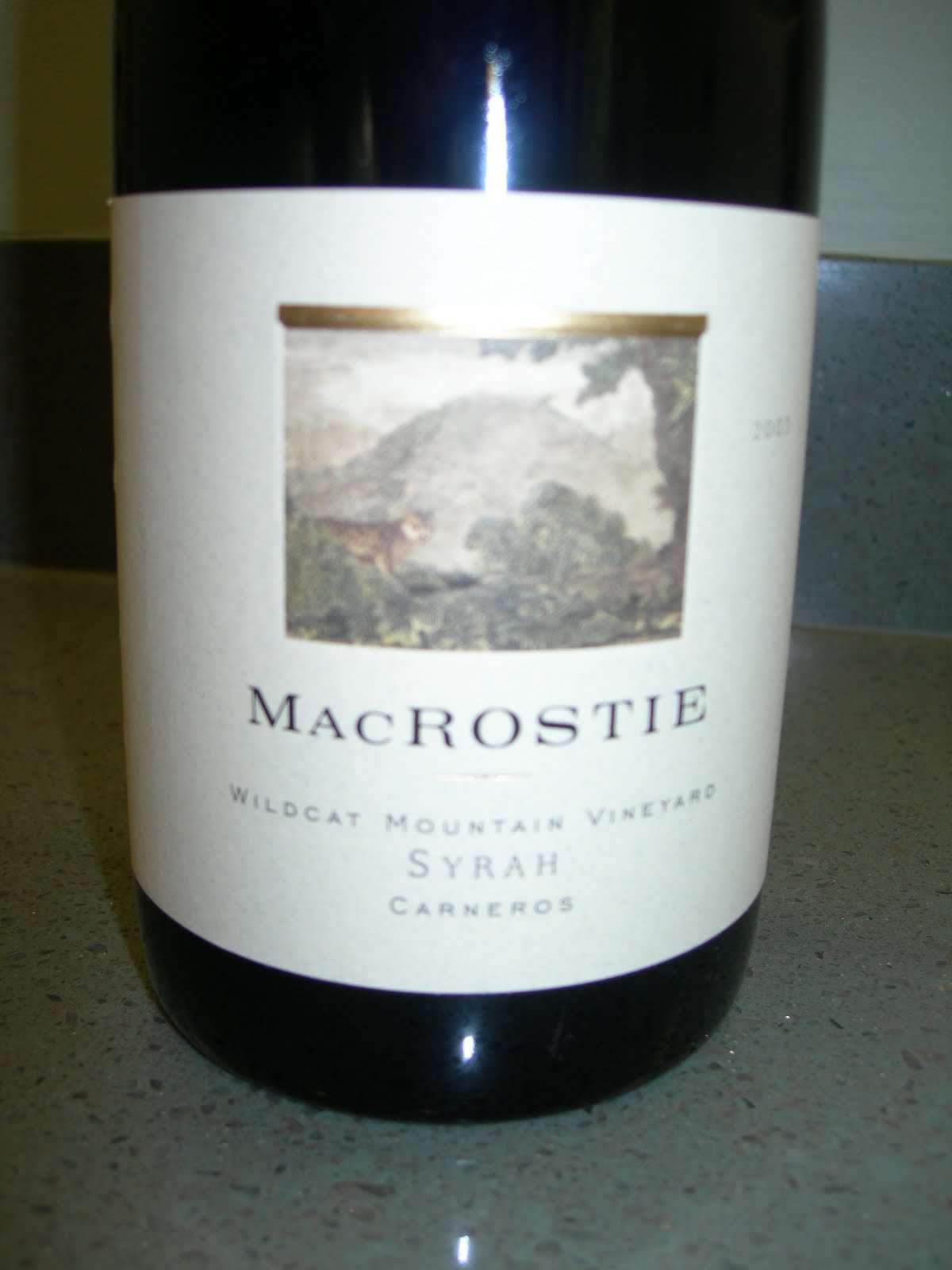
First, a nice label. You may think I’m kidding. But I believe that if a winery has a good aesthetic when it comes to designing a wine label, it is more likely to have a good aesthetic when it comes to the wine. Of course there are exceptions. French labels are some of the most confusing and least attractive of any around and yet the wine in the bottles can be spectacular. Living close to and in the wine country of California, I’m willing to stand by my attractive label theory.

Second, parity. I want the food and the wine to have a reciprocal relationship, with a nice balance and complementarity. Light with light, spicy hot with cooling, complex with complex. I usually start with the food. Let me give you a couple of examples.

Grilled steak, I’d choose a merlot. I might mention at this point that I am not a big Cabernet Sauvignon fan—the so-called flavor bombs that are too high in alcohol for my taste and pretty much dominate any conversation.
Poached salmon, rosé. I think a really tasty pink wine is so pretty during the summer. It is the perfect brunch wine with eggs and cheese. A slow roasted salmon with a lot of flavor would work nicely with a light or medium red, as well as a good white.

If I’m cooking an Italian tomato sauce, even if it’s vegetarian, I’d choose a Sangiovese, the Italian Chianti grape. My rule of thumb: Whatever grape is grown on the land where the food originates is probably going to work with the food.

If my beef short ribs are perfumed with cinnamon and orange, I would choose a red wine that has some of the same spiciness, like a zinfandel or a syrah. For those who can’t drink red with this dish, an oaked chardonnay would work especially if it had some vanilla overtones.

If I’m cooking a spicy chicken curry or a bean thread noodles and pork with hot peppers, I might want to temper the heat with a nice riesling, the slight sweetness and the chill working well with the heat. A floral viognier is also lovely to balance heat.

Pork dishes can go either white or red or even pink depending on how it is prepared. Same with chicken. Tomatoes and mushrooms in the preparation almost always mean that a red might be drunk with the dish. I would choose a white if a cream sauce is involved.


Third, personal preference. I consistently love to drink a couple of different wines and will choose them again and again, whether or not they are in fashion or necessarily “go” with the food. Then pretty regularly I give myself a little tasting adventure and try something new and exotic, just for the fun of it. I try to avoid ruts.

Katherine and I drank and still love to drink oaky, creamy, bake-house-scented chardonnays. They are just so yummy, even though they have fallen from grace. I also love the unoaked crisp stainless steel chardonnays but the oaky ones are my wine version of “comfort food.” A glass before dinner, catching up on each other’s day, couldn’t be better.

I love pinot noirs, not because of the movie Sideways, but because they are often such great food wines. I’m not talking about the wimpy pinots that can’t stand up to anything, but the rich juicy kind that taste like plush velvet.

I stay away from anything called grassy, like some sauvignon blancs. And I don’t go out of my way to drink whites described as flinty or high in minerals. I am occasionally rewarded by a wonderful wine that has been so described and hope this means my palate is expanding.


Fourth, I try to trust myself, my taste, judgment, and intuition. I like to have a good time making the choices. I will ask a wine person for suggestions but it’s my money, my dinner, and my choice. The most expensive bottle isn’t necessarily the best.

How do you make your decisions?

Menu 16: A Lemon and Herb Extravaganza

If I were to choose a wine to go with the lemon and herbs in all three dishes, I might try a gewurztraminer or a riesling with a little residual sweetness to balance all the sour herbiness. What do you think would work nicely?

John’s Roasted Chicken with Herbs and Lemon


1 (3½ pound) free-range chicken
2 tablespoons olive oil
2 tablespoons butter, softened (in the microwave for 1 minute)
2 tablespoons finely chopped flat leaf parsley
2 teaspoons finely chopped fresh thyme or rosemary
¾ teaspoon salt
½ teaspoon pepper
Lemon wedges, for serving
Chopped parsley to garnish, optional

1. Position a rack in the middle of the oven and preheat to 400ºF. Line a low-sided roasting pan with parchment paper. If you are using a pottery dish, there is no need to line it with parchment.
2. Remove the giblets and the neck from inside the chicken.
3. Set the chicken on its tail with the backbone facing you. Cut down along one side of the backbone from the neck to the tail. Cut down along the other side.
4. Open the chicken and split the chicken between the breasts from neck to tail. You now have two halves of a chicken, without the backbone. Remove the center breastbone if you want.
5. In a small bowl, mix the olive oil, butter, parsley, salt, and thyme or rosemary. Massage the mixture all over the chicken halves, slipping some underneath the skin. Season with salt and pepper, especially the inside without the skin.
6. Set the chicken halves, skin side up, on the prepared pan and roast until the juices run clear when the thickest part of the thigh is pricked, about 40 minutes. (A 4-pound chicken will take 50-55 minutes; a 5-pound chicken will take 50-60 minutes.)
7. Serve hot or warm, with lemon wedges and the optional parsley.

4-5 servings
Adapted from Carrie Brown’s The Jimtown Store Cookbook

Lemon Barley Pilaf


2¾ cups water
1 teaspoon salt
1 cup uncooked quick-cooking pearl barley
OR
1 cup de-hulled barley
2 tablespoons canola oil
1 large onion, chopped
1 tablespoon chopped fresh sage or 1 teaspoon dried sage
1 tablespoon chopped fresh thyme or 1 teaspoon dried thyme
Grated zest from 1 lemon
2 tablespoons lemon juice
Salt and pepper to taste

1. Bring water and salt to a boil and stir in the barley. When the water returns to a boil, reduce the heat, cover and simmer for 10 minutes for the quick-cooking and 25 for the de-hulled. Drain if necessary.
2. Heat oil in a nonstick skillet and sauté the onion until transparent and golden, about 10 minutes. Add the drained barley, herbs, lemon zest, lemon juice, salt and pepper to taste, and toss together. Serve warm or hot.

Note: You can make the whole dish ahead of time. When it is time to serve, reheat it in the skillet and taste for seasonings, especially salt.

4 servings
Adapted from Linda Gassenheimer’s Dinner in Minutes

Indian-Style Broccoli with Spiced Yogurt


2 large heads of broccoli, broken into florets
2 teaspoons cumin seeds
2 teaspoons fennel seeds
5 cardamom pods, seeds removed and pods discarded
¼ teaspoon sweet smoky paprika
1 cup natural plain yogurt, medium consistency (not too thick or too thin)
Zest from 1 large lemon
Juice from 1 large lemon or less if your yogurt is pretty thin
Salt and pepper to taste

1. Blanch the broccoli in boiling salted water for 4 minutes or less, until bright green.
OR
Steam the broccoli over boiling water until tender and bright green.
Drain in a colander.
2. Toast all the spices (except the paprika) in a hot pan for 2 minutes or until they become fragrant. Let them cool slightly. Grind them in a spice or converted coffee mill. Add the paprika to the mixture. Store any leftover spice mixture in a labeled jar to use the next time you make the dish.
3. Stir about half of the spices into the yogurt. Taste the result, adding more of the spice mixture to your taste, along with the lemon zest, juice, salt and pepper. Save a bit of the spice mixture for the garnish. The yogurt mixture improves if allowed to sit for an hour or more.
4. Place the broccoli in a serving bowl. Just before serving, pour out any accumulated water from the bottom of the bowl and then spoon part of the yogurt mixture over the top. Sprinkle with some of the reserved spice mix. Serve warm or at room temperature with the remaining yogurt mixture in a small bowl on the side.

4-5 servings
Adapted from Jamie Oliver’s Cook with Jamie: My Guide to Making You a Better Cook

Tuesday, May 18, 2010

Coming Home


There is so much to do after being away for 18 days. Besides all the normal things like going through the mail, paying the bills, watering the plants, doing laundry, I need to finish my travel journal. I try to write in a journal nearly every day I’m away, leaving plenty of blank pages to incorporate the ephemera: train tickets, playbills, menus, blogs, mini-photos, drawings of chairs. The trip journal takes on a life of its own as an art project, memory booster, and scrapbook. I revisit the country in choosing photos and pasting them into the book; in the process I move the memories and learning into my brain’s long-term storage compartment. I love the process. Even more I love having it done.


My very first trip journal was a small green faux leather book that I took with me to Europe in the summer of 1965. Writing with a very fine-pointed rapidograph pen, I crammed more information into this little book than I ever thought possible. The ephemera and photos went into scrapbooks and a box that for years have been tucked away. My current journals combine it all.


I also get to start cooking again. And how about this: I continue to have a hankering for Middle Eastern food—even though I spent six days eating it twice or three times a day. So I’ve made a Bulgur Salad with Roasted Peppers, Meatballs with Sour Cherries from The Book of Middle Eastern Food, trying to reconstruct the dish we had our first night in Damascus (see photo), Lebneh with Za’atar, Red Pepper Walnut and Pomegranate Dip, Zucchini Mint Fritters, and Cinnamon Chicken with Orzo. So good. Still hungry for those flavors.